The initial goal of these simulations was to robustify the Kreutz simulations and verify that they work well over a wide range of Kreutz comets, in order to be confident in future simulations for comet C/2026 A1 MAPS. However, this work quickly went beyond my initial scope, and I ended up simulating all the main confirmed Kreutz members as well as several possible historical ones.
To ensure robust simulations and avoid “overfitting”, all Kreutz comets were modeled using the same fixed activity law (n = 3.6, corresponding to a slope of 9). Only the absolute magnitude was adjusted, with the aim of reproducing the reported post-perihelion behavior (comet brightness, duration of observation, and tail length) as closely as possible. Since the parameters were adjusted to fit the post-perihelion phase and Kreutz comets are significantly more active and brighter after perihelion, the simulations definitely overestimate the pre-perihelion brightness and tail development.
Although it is difficult to assess how accurately the simulations can reproduce historical sungrazers for which no images or drawings exist, they appear sufficient to at least compare the relative intrinsic sizes of sungrazers, as the effects related to viewing geometry and forward scattering are taken into account, like a relatively small Kreutz comet appearing in winter would appear brighter and develop a longer tail than a much larger comet observed under less favorable geometries.
This type of estimation of the relative intrinsic sizes of Kreutz comets is something I have not found in the literature I have read. It reveals interesting points about the relative sizes of Kreutz members, that make sense but are not obvious, for instance:
- Comets Ikeya-Seki, Pereyra, and White-Ortiz-Bolelli were likely of comparable intrinsic size.
- The Great Comet of 1882 was exceptionally large, probably at least three magnitudes intrinsically brighter than Ikeya-Seki.
- Comet 1843, often described in the literature as the largest Population I member, was probably similar in size to Ikeya-Seki rather than significantly larger.
- Compared to 1843 comet, some earlier modern Kreutz comets were likely similar in size or even notably larger like C/1695 U1.
Like it is often the case in science, it also brings questions.
For instance, comet 1138, the progenitor of Population II (including 1882 and Ikeya–Seki), was itself very large. Comet 1106 appears to have been at least comparable in size to 1138. However, none of its known fragments are as large as the 1882 comet.
- Where most of the mass of comet 1106 went?
- Was there a large, unrecorded modern Kreutz comet? or did comet 1106 fragment into many medium-sized bodies like the comets of 1668, 1689, 1695 and 1702?
These simulations can also be used to assess whether reported observations (brightness, tail lengths at different times, duration of visibility) are consistent with the behavior of a typical Kreutz comet, and to support or question the proposed membership of historical comets in the Kreutz family with poorly constrained orbits. For instance, based on the simulations, it seems comet 1232 could have been another very large Kreutz object, comparable to comets 1106 and 1138.
- How could such a large comet fit into the generally accepted genealogy of the Kreutz family?
- Could it be associated with some Kreutz population?
- Has it already returned around the sun in modern times, or is it yet to come as another big Kreutz member?
Hopefully, comet MAPS could bring some answers, as its very early discovery will allow very accurate knowledge of its orbit, which could help understand its past perihelion and shed some light on the genealogy of the Kreutz family.
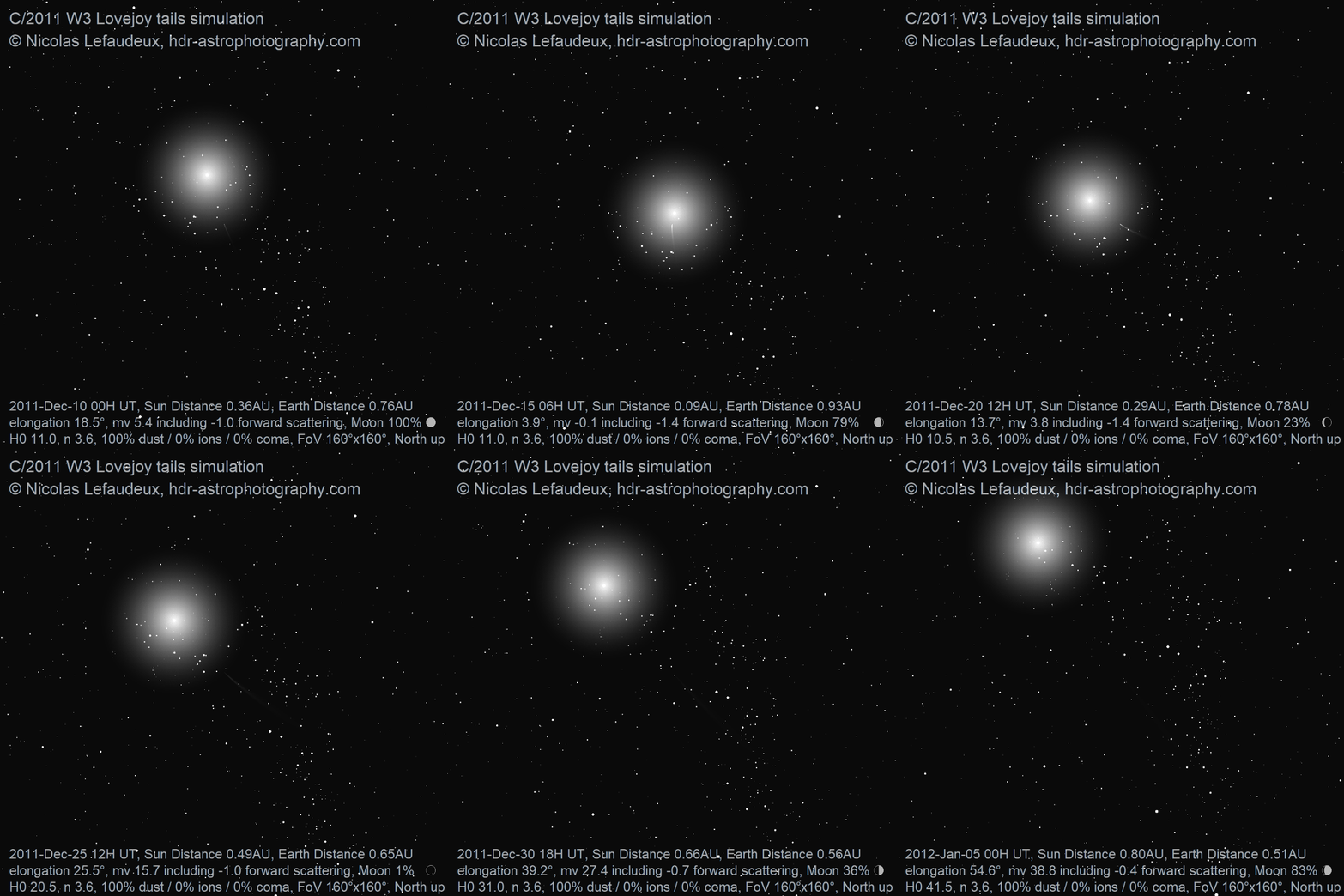
- C/2011 W3 Lovejoy
Comet Lovejoy is simulated with H0=11, which corresponds to a small Kreutz member, the smallest of the 15+ Kreutz simulated. The simulation renders well the evaporation of the inbound tail as the comet arrives perihelion, as well as the growth of a new outbound tail after perihelion as recorded by SOHO spacecraft.
The “headless” aspect is render by adding a 1.5 magnitude outburst during the days of between December 17th and December 20th, followed by a rapid decrease of the H0, as the nucleus was reported to have totally disrupted on December 20th. The comet is simulated as headless comet when it got out of twilight, with a quite long tail and rather low surface brightness as was observed by southern hemisphere observers, and disappearing around the beginning of January.
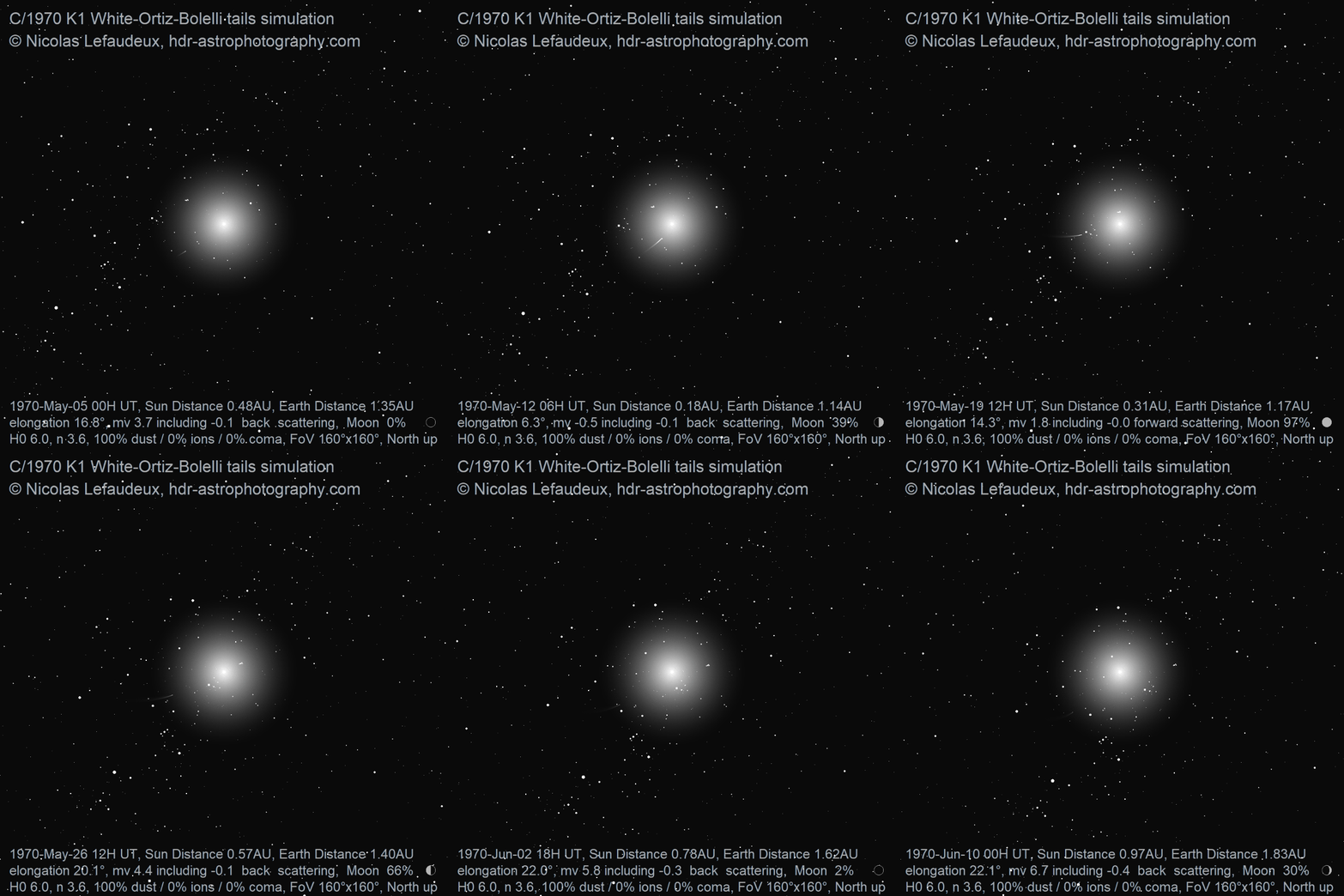
- C/1970 K1 White-Ortiz-Bolelli
Comet White-Ortiz-Bolelli is a Kreutz sungrazer that is not widely known as it was not spectacular. It appears that this was mostly due to the very unfavorable circumstances of apparition, with a perihelion mid-May 1970, which makes that the comet was far from Earth and never really got out of the twilight. The best image obtained on May 24th shows a ~15° tail. The overall behavior of the comet (tail length and brightness) is best rendered using a relatively large H0=6, which makes that the comet was intrinsically only 1 magnitude smaller than Ikeya-Seki. Comet White-Ortiz-Bolelli thus appears to be a significant Kreutz member, but with unfavorable circumstances.
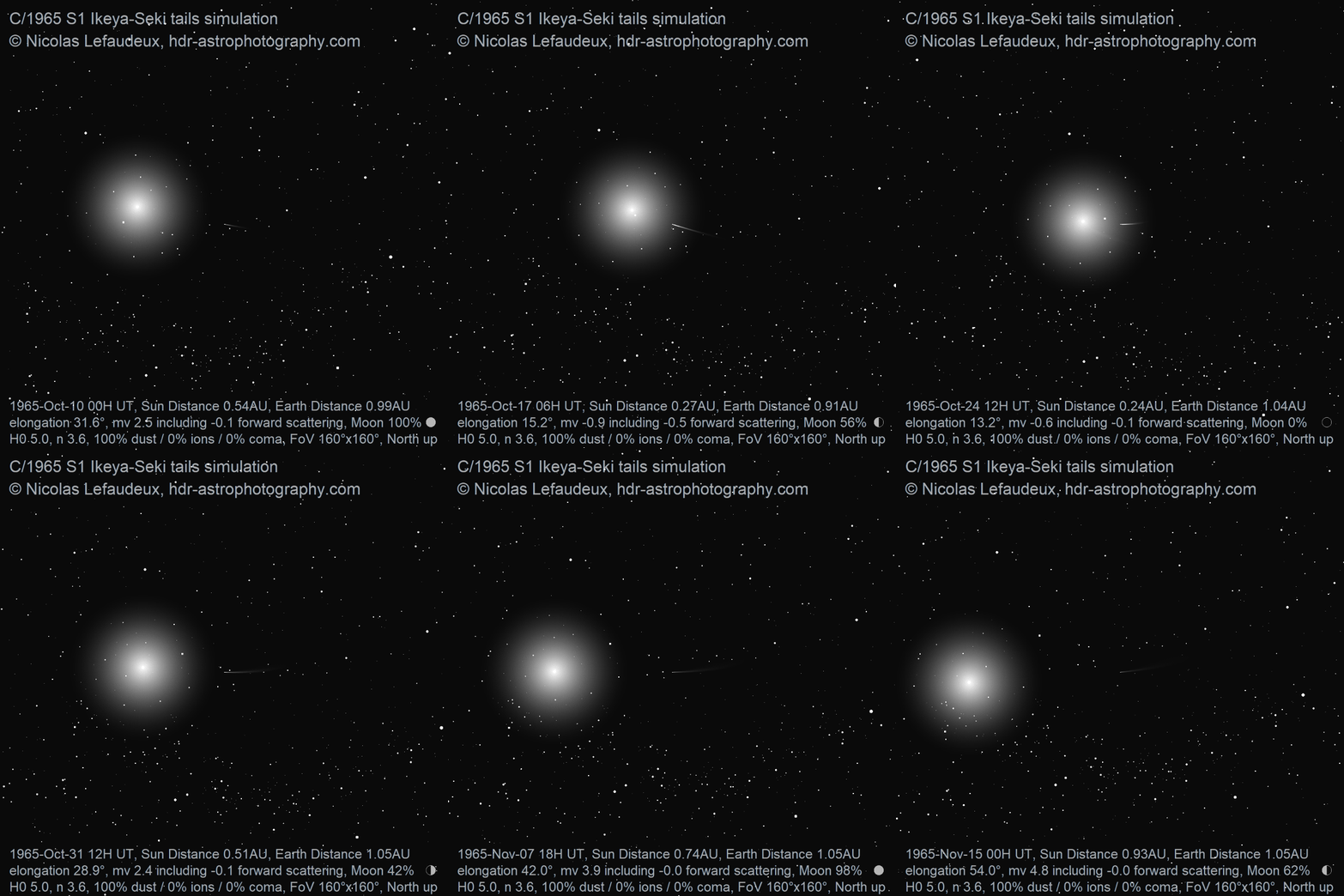
- C/1965 S1 Ikeya-Seki
Comet Ikeya Seki is the best sungrazer of the 20th century. It was discovered before perihelion, and was observed in daylight on the few days around perihelion. After perihelion, it showed a high surface brightness, growing from around 15° when it got out of sun glare (~October 26th) to 25° at the beginning of November. Photographically, the tail length kept increasing until the end of November, reaching around 35°. The overall behavior of the comet is best rendered using a relatively large H0=5.
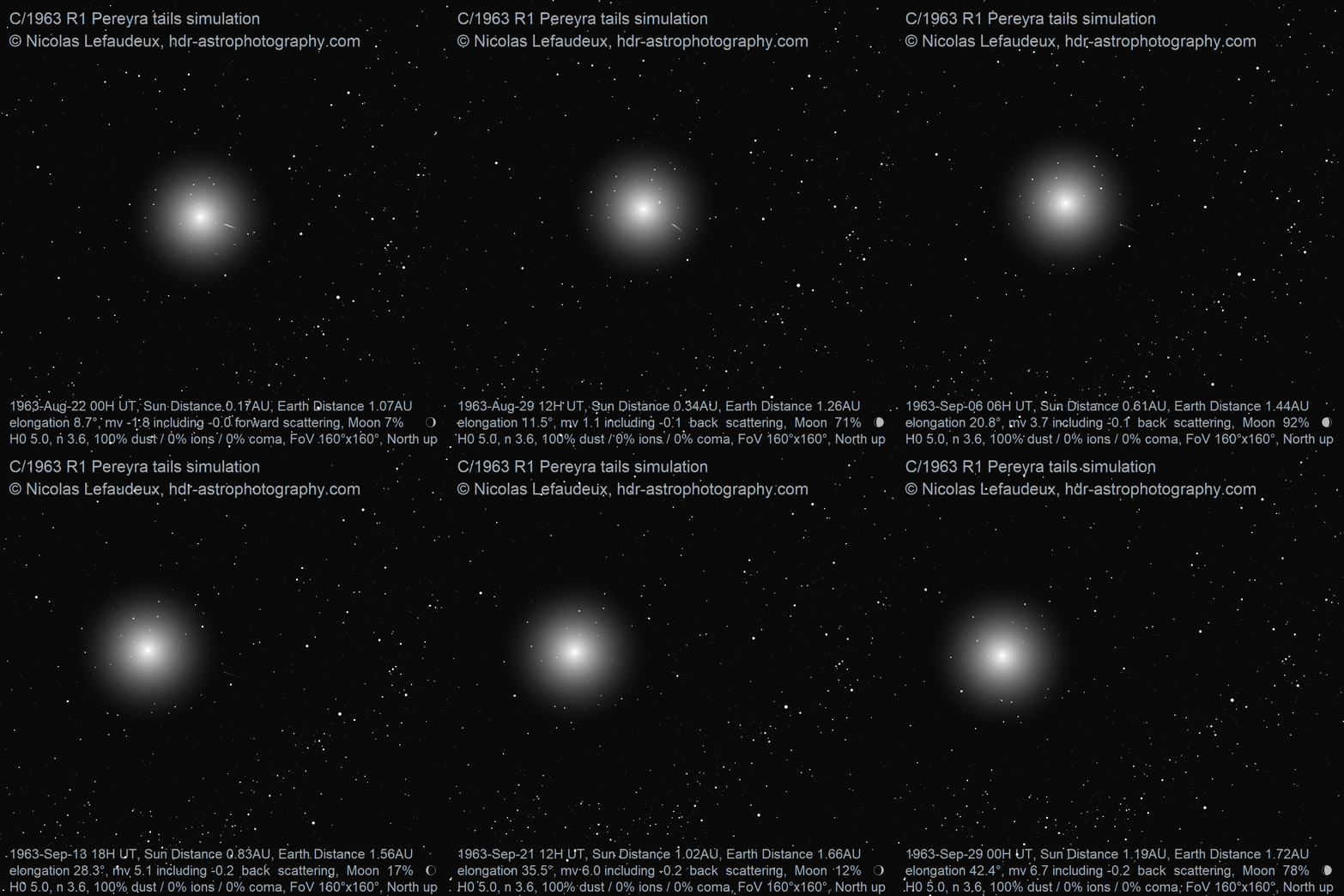
- C/1963 R1 Pereyra
Comet Pereyra is a Kreutz sungrazer that had unfavorable circumstances though not as bad as White-Ortiz-Bolelli. It is recognized in the literature that the comet was a significant Kreutz member. It showed a tail reported mostly to be between 6° and 10° visually. I simulated it with a H0=5 like Ikeya-Seki, but from the simulations, it seems possible that it was intrinsically a bit bigger (H0=4?).
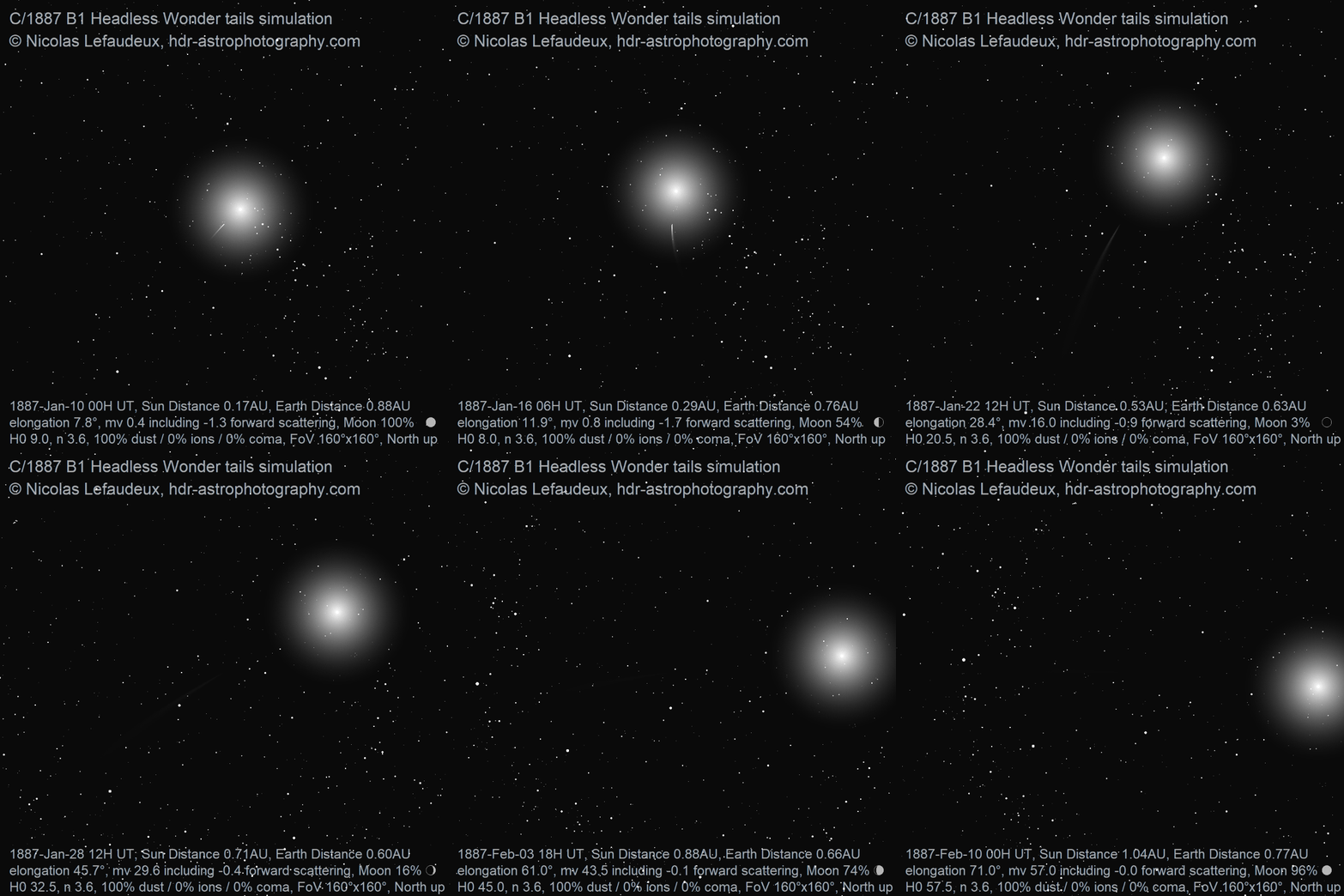
- C/1887 B1 Headless Wonder
1887 comet is a Kreutz member that disintegrated and appeared as a headless comet. Despite the disintegration, it showed a very long tail, more than 50° long. I simulated with the same outburst profile as Lovejoy (post perihelion outburst of 1.5 magnitude for 3 days, followed by rapid decrease of H0). A value of H0=9 renders well the tail length observed, and overall appearance and duration, with a maximum tail length around 50° on January 24th. Thus, it seems that comet 1887 B1 was significantly larger than Lovejoy (2 magnitudes), while remaining smaller than other Kreutz members. The long tail was primarily caused by the very favorable circumstances, with a perihelion on January 12th, making the comet approach Earth at 0.6AU, in a configuration associated with notable forward scattering. This largely compensated for the relatively small intrinsic comet size.
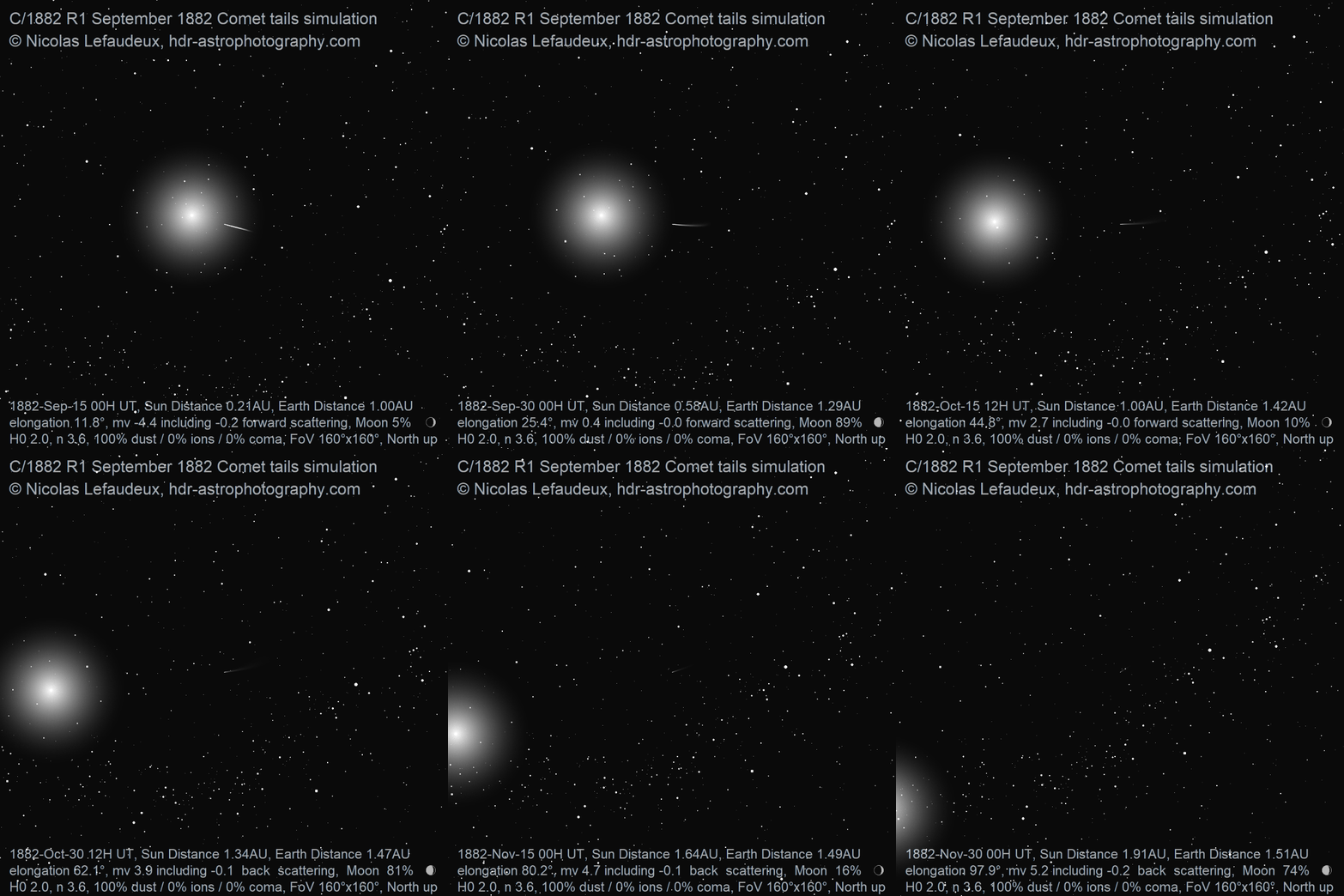
- C/1882 R1, the biggest modern Kreutz
1882 comet is widely recognized as one of the greatest Kreutz. Despite relatively unfavorable circumstances with a perihelion mid-September, it was very bright, with very bright tail, and was observed to the naked eye until mid-February, for 5 months after perihelion. Such duration definitely shows that the comet was much bigger than any other modern Kreutz. Due to the circumstances, the tail never grew to extreme length. it was mostly reported to be between 15° and 20° long. I simulated the comet with H0=2, making the 1882 comet intrinsically more 10x brighter than Ikeya-Seki. Possibly, the size is still underestimated and H0 could even have been larger. In the literature, 1882 comet and Ikeya-Seki are considered to be the largest members of population II, which is though to come from the splitting of 1138 comet. The fact that the difference in H0 between 1882 comet and Ikeya-Seki is so large makes that 1882 should probably be considered as the actual return of the 1138 comet, while Ikeya-Seki should be considered only as a small fragment.
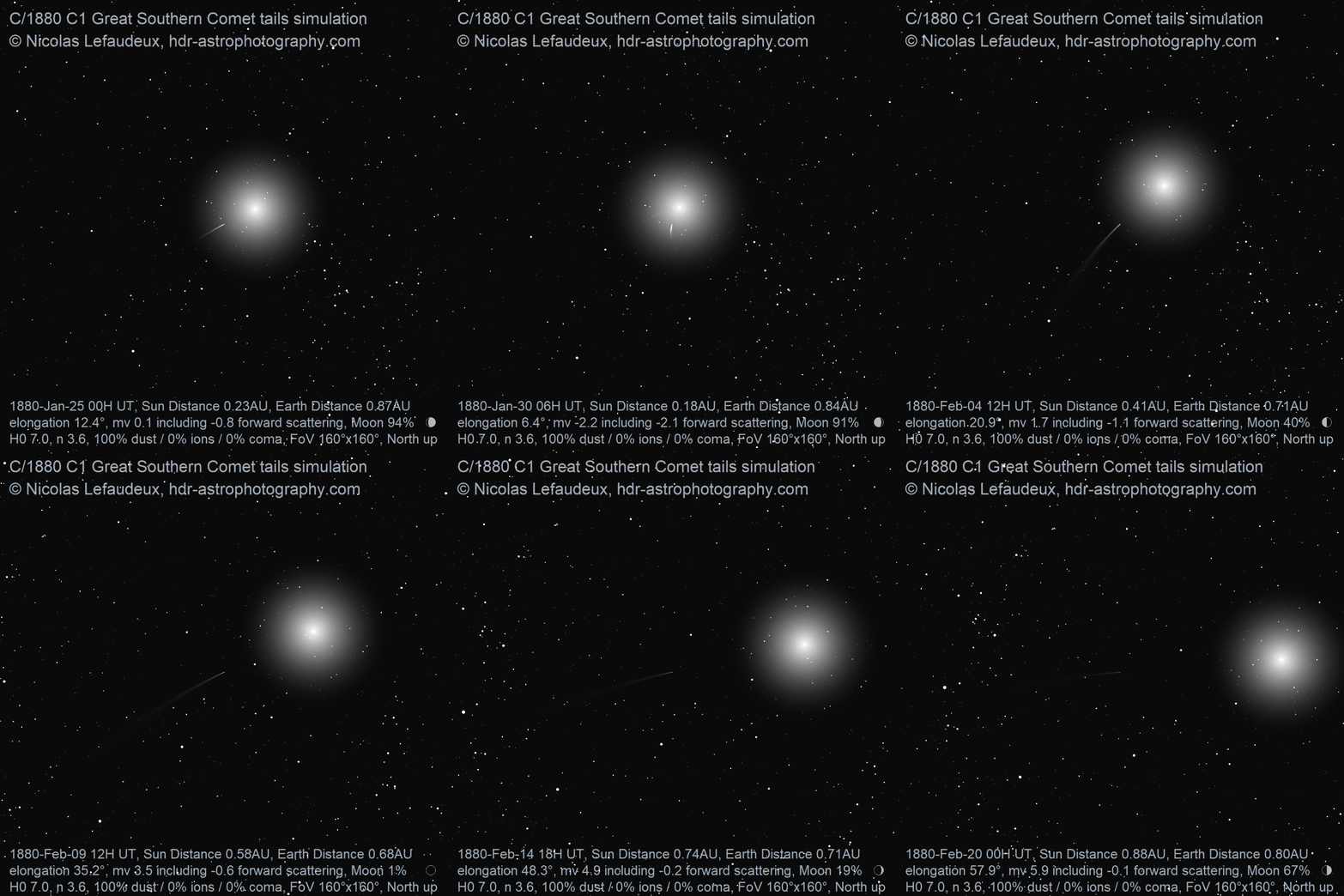
- C/1880 C1, Southern comet
1880 comet is the modern Kreutz member that displayed the longest tail, reaching more than 50° around February 5th, despite not being particularly bright. The comet is simulated with H0=7, making it intrinsically “medium sized”, halfway between comets like Ikeya-Seki and Pereyra (H0~5), and the smaller 1887 Headless comet (H0~9). The tail length and overall spectacular appearance is primarily due to favorable circumstances associated with significant forward scattering.
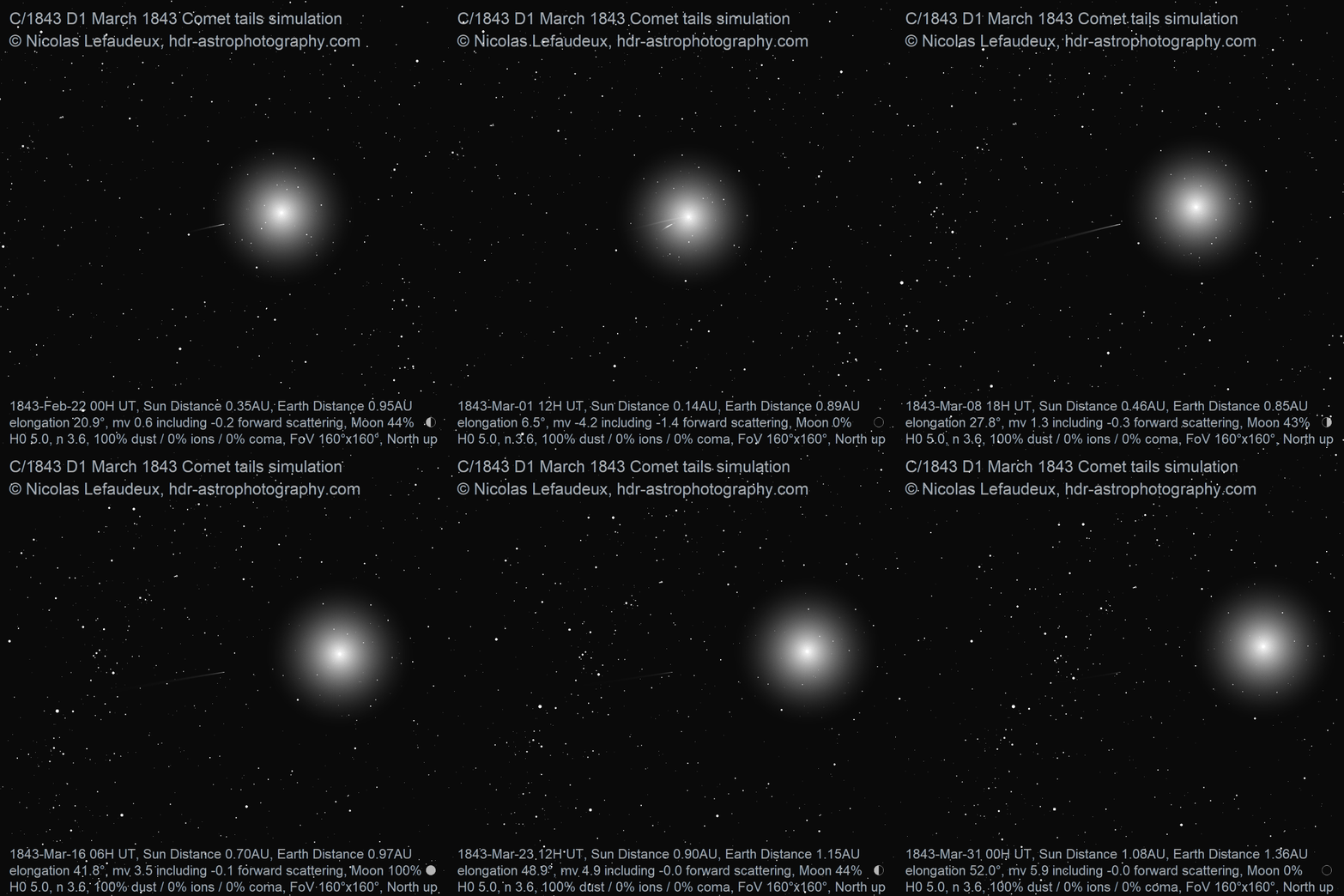
- C/1843 D1, the Great (but not so big?) 1843 comet
1843 comet is considered one of the most spectacular modern Kreutz and the main member of Population I which is though to come from the great comet of 1106. It was discovered before perihelion and observed in daylight. After perihelion, it displayed a bright, long and narrow tail, growing from around 25° to more than 40°. This was simulated using H0=5, making 1843 similar size as Ikeya-Seki. The simulation renders well the overall appearance of the straight and narrow tail, as well as the evolution of the length of the tail. The tail was around 20° when it emerged the sun glare on March 3rd. it was then very narrow, and high surface brightness. Then the tail reached more than 40° on March 7th, and remained about this length until March 23rd while slowly fading. In the simulation, the maximum tail length is about 50° at the time of the full moon (March 16th). The spectacular tail of 1843 comet is primarily due to the fact that Earth was near orbital plane of the comet, making the tail very narrow and increasing its brightness and length.
I find the fact that simulating 1843 comet “only” requires H0=5 is a bit surprising, as the 1843 comet is widely considered the biggest Population I member, which is considered to come from the huge 1106 comet. Compared to the Population II, with main member being the huge 1882 comet (H0=2 or larger), there seems to be a lot of “missing mass” in the Population I to explain the gap between the huge intrinsic size of 1106 comet (H0~1 or 2?) and 1843 comet (H0~5).
- C/1702 D1, a small Kreutz?
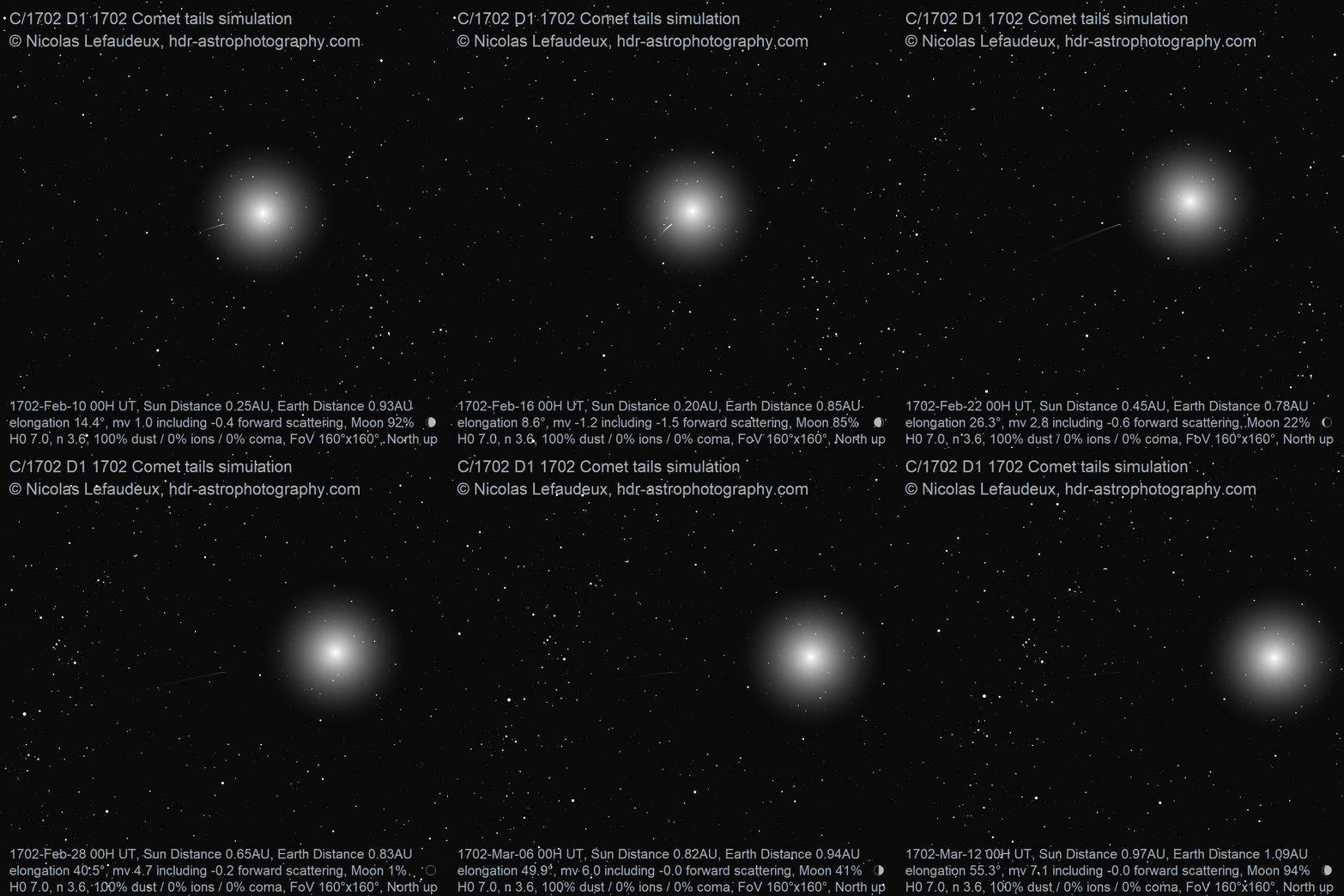
1702 comet has been ranked by England as very likely Kreutz member, with perihelion on February 15th, with a tail reaching more than 40° at the end of February. I simulated it with H0=7. Simulated tail length is consistent with observations. Overall, it appears very similar to 1843 comet, though less bright.
- C/1695 U1, an intrinsically big Kreutz?
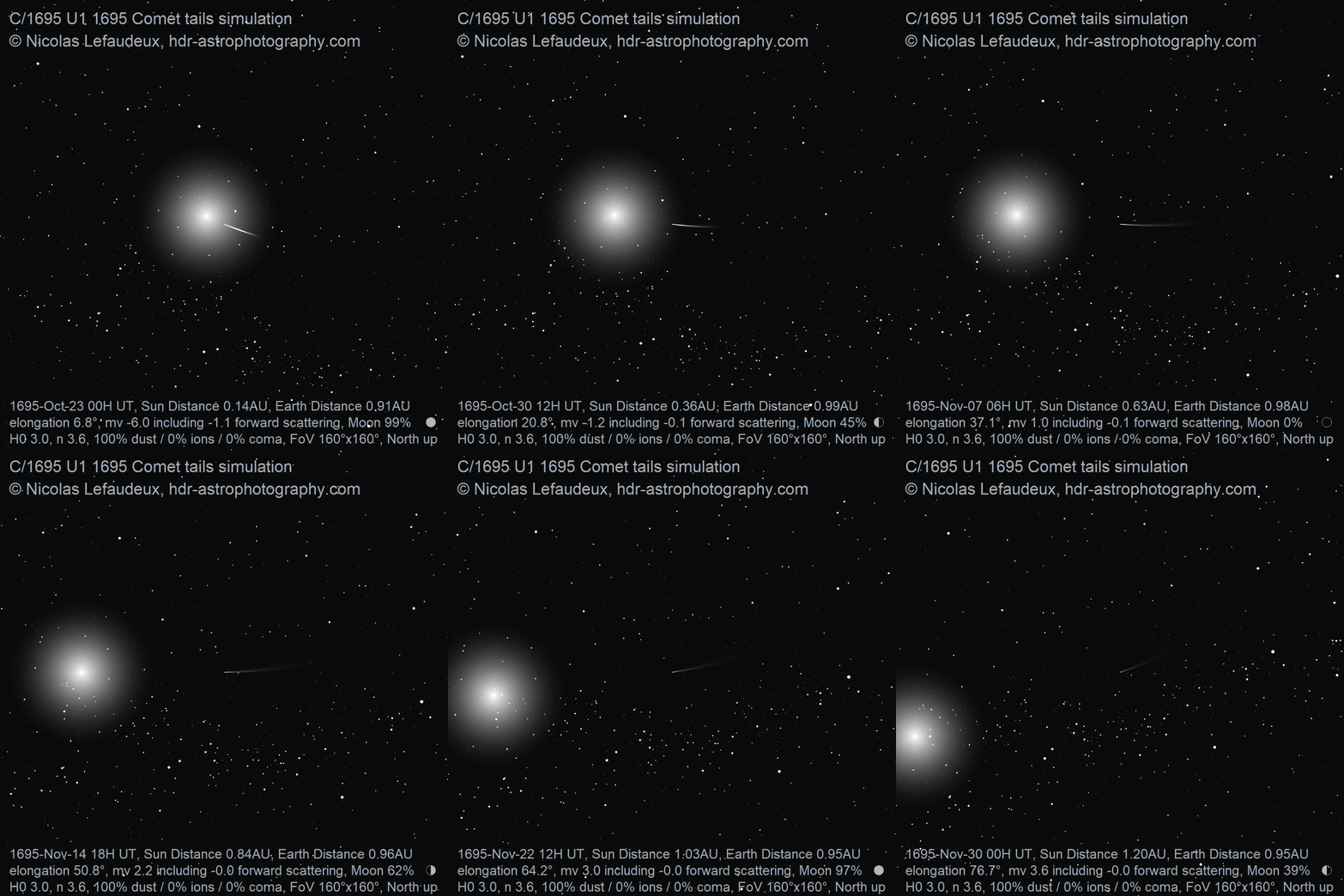
1695 comet has been ranked by England as very likely Kreutz member, with perihelion on October 23rd. The circumstances were very similar to Ikeya-Seki, however the reported tail length is much longer (40°), and the comet was last seen due to moon interference on November 19th. The overall appearance of the comet is best simulated using a large H0=3, making the comet intrinsically bigger than all the other modern Kreutz member (except 1882 comet). Using the simulations, it seems possible that the biggest member of Population I could be 1695 comet, not 1843 comet.
- C/1689 X1, a Kreutz after all?
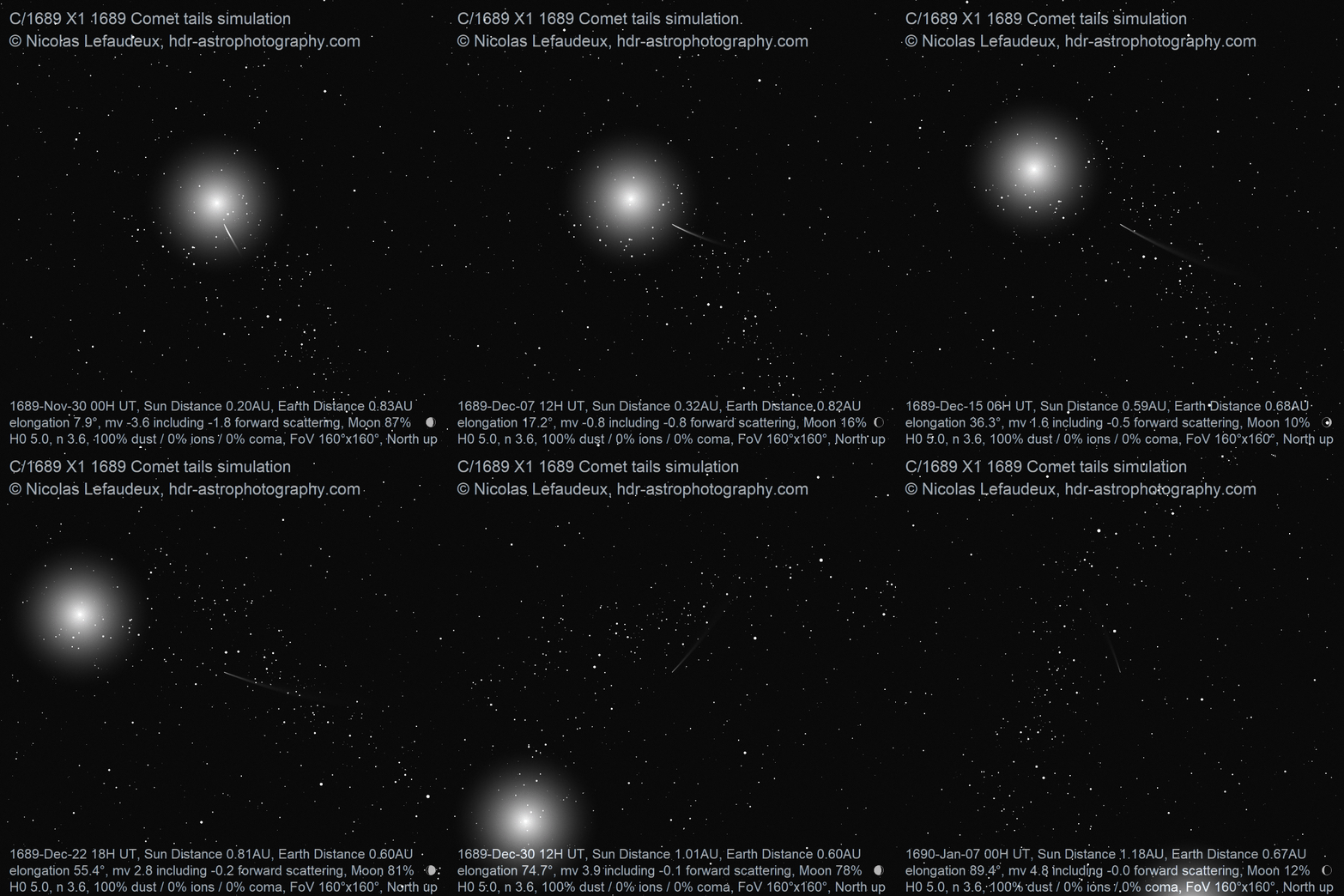
1695 comet has been ranked by England as very likely Kreutz member, with perihelion on November 30th. It showed a long tail, reported to reach 60° by Vogel, and was seen until January 1670. Sekanina considers it as an unlikely Kreutz member. Using H0=5, the simulations indeed give an appearance consistent with Vogel report. The long tail was due to favorable circumstances and relatively large size (similar to Ikeya-Seki). Thus, the simulations seem to support the fact that 1689 could have been a significant Kreutz member.
- C/1668 E1, an almost perfect copy of 1843 comet?
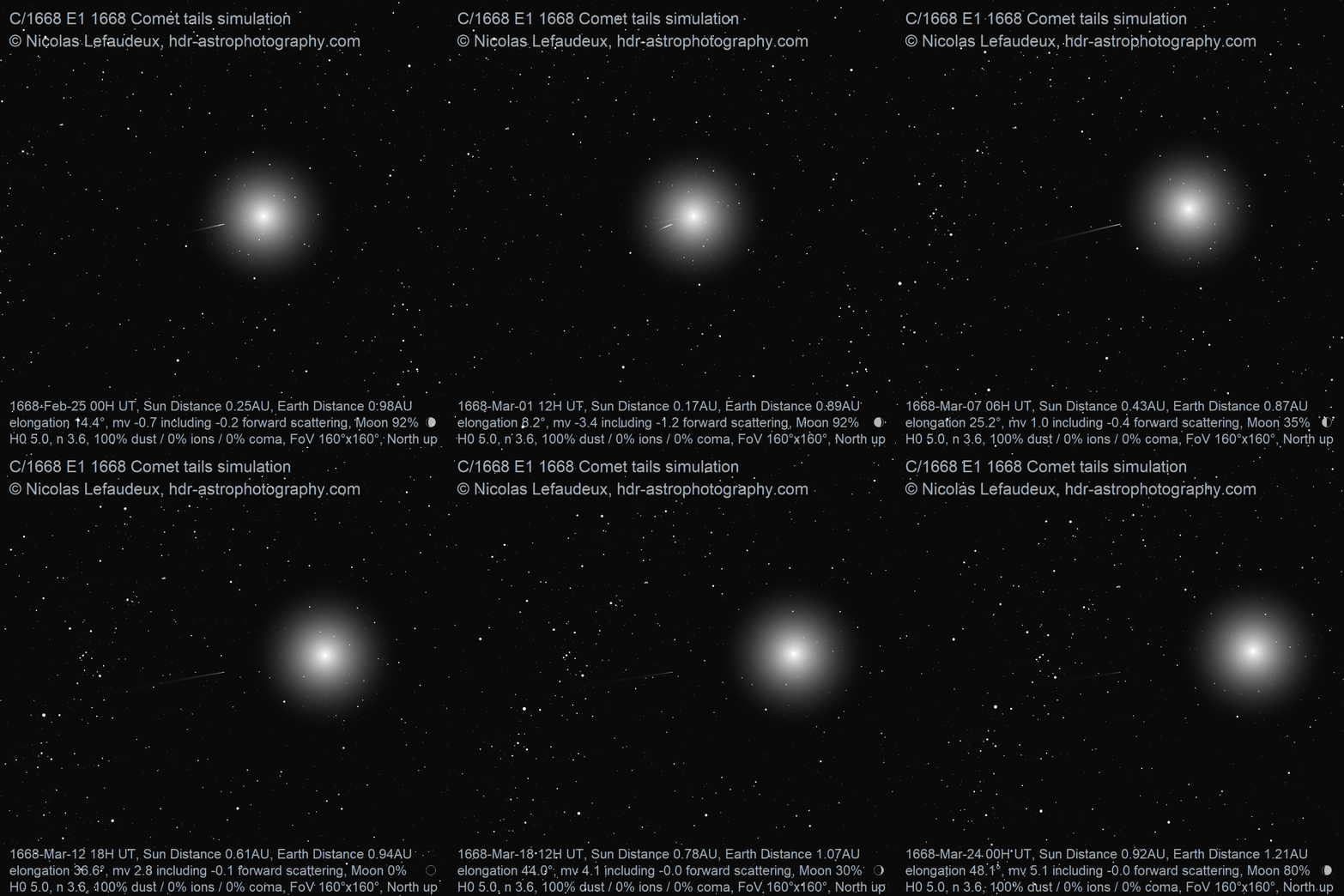
1668 comet has been ranked by England as very likely Kreutz member, with perihelion on February 28th, with a tail reaching more 40° in mid-February. I simulated it using H0=5. Overall, it is an almost perfect copy of the appearance of 1843 comet, in terms of brightness, tail brightness (tail reported to be reflecting on the water), tail length (maximum around 40°) and duration of visibility (end of March).
- 1232 comet, a previously unrecognized, big Kreutz?
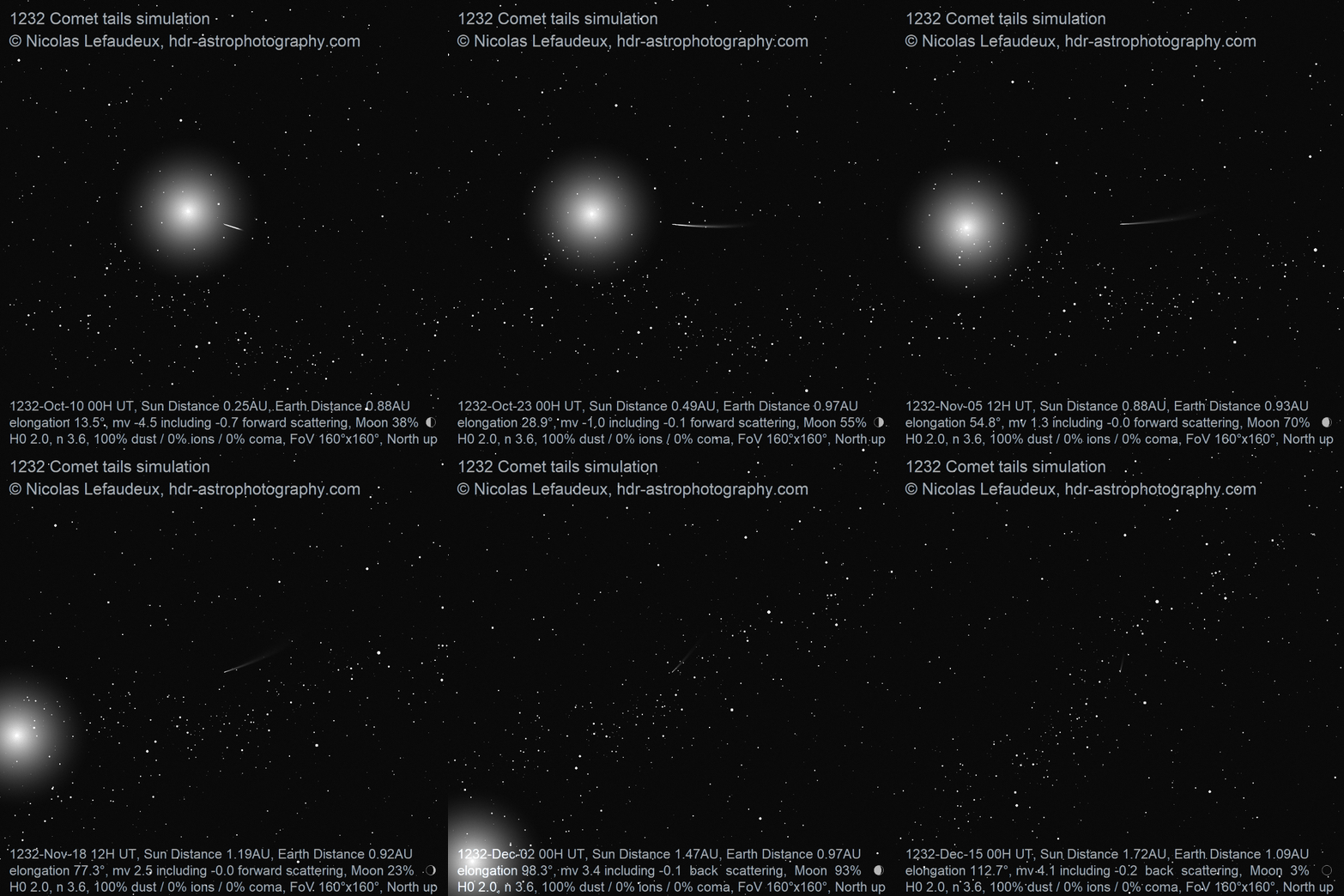
Reading the work about possible early sungrazers by England, the comet of 1232 immediately caught my attention: besides being a comet observed in autumn, in the right location for Kreutz, it had several important features:
- The shape of the tail like an “elephant tusk”, meaning long, quite narrow and slightly curved is typical of Kreutz sungrazer appearing in autumn (like Ikeya-Seki)
- The growth of the tail during the observation period is also a distinctive feature of Kreutz comets.
- The length of the tail reported to reach 60° is, on the other hand, much larger than the one of typical autumn Kreutz (Ikeya-Seki tail reached 25°), which would mean a very large Kreutz member
- Also, the comet was last observed until mid of December, for a perihelion possibly on October 13th, which is also longer than the duration of observation of a typical Kreutz and consistent with a very large Kreutz member
In the simulations, all of this is consistent with a very large Kreutz member, as large or even bigger than 1882 comet. I simulated it using H0=2. In the simulation, the tail reaches a maximum length around 40° in the first half of November, which is still less than reported. In mid of December, the comet would have been around magnitude 4, which looks realistic for a last observation considering the southern declination.
Using simulations, it seems possible that the 1232 comet was a very large Kreutz member, possibly of similar size as the 1106 and 1138 comets which are widely accepted in the literature as being the largest members of the Kreutz family that returned in the Middle Ages. Of course, this raises questions, like how 1232 comet would fit in the accepted genealogy of Kreutz sungrazers? is it associated with an identified population of Kreutz comets? did the 1232 comet already returned perihelion in modern times or is it yet to come?
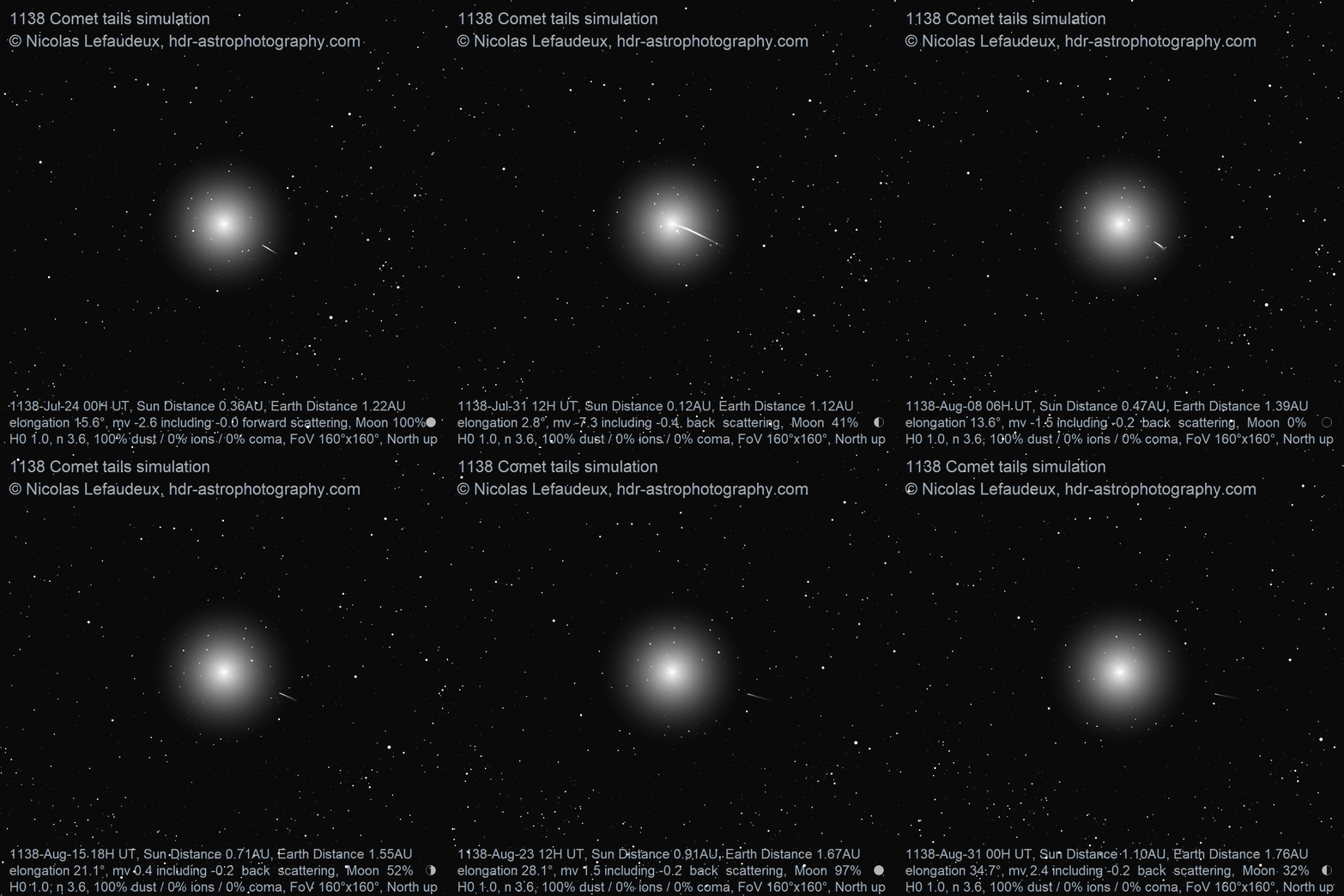
- 1138 comet, the progenitor of Population II Kreutz
1138 comet was identified in 2022 by Sekanina and Kracht as the likely progenitor of 1882 comet and Ikeya-Seki (Population II Kreutz). It had very bad circumstances, and despite its probable huge size, it was not spectacular. Being the progenitor of 1882 comet, I simulated with H0=1 (1 magnitude larger than 1882 comet). Indeed, even such a huge comet would have been not spectacular due to the very bad circumstances.
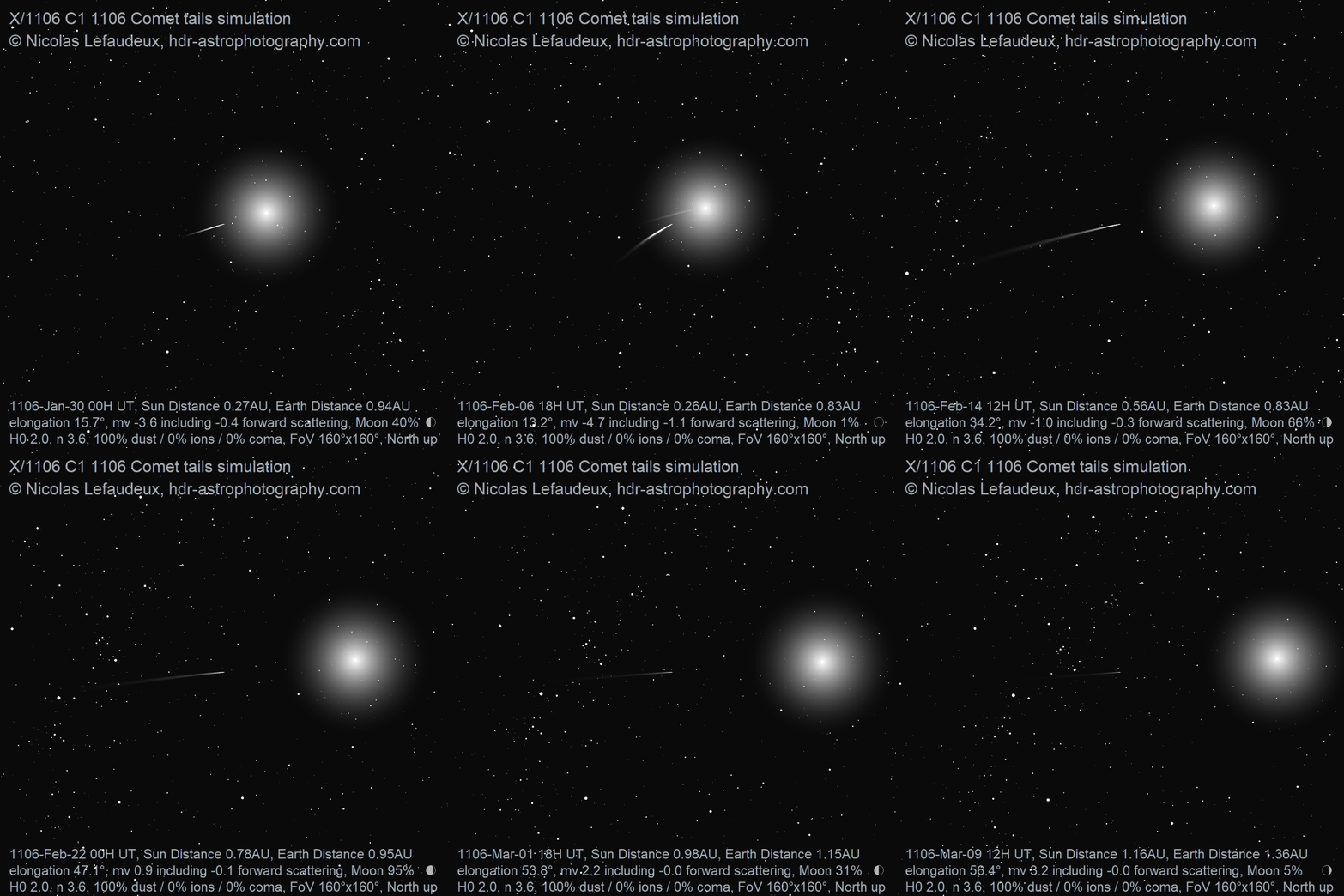
- X/1106 C1, the progenitor of Population I Kreutz
Together with Aristotle’s comet, the comet of 1106 was one of the greatest Kreutz sungrazer. It had a similar overall appearance, with a perihelion date during the winter. I simulated it with a perihelion on late February 2nd. With this perihelion date, the comet began to emerge from twilight for Northern hemisphere on February 7th. Similarly as Aristotle’s comet, its tail quickly grew as the comet got better visible.
As it is considered the progenitor of Population I Kreutz, which lacks huge members like 1882 comet, I simulated it with H0=2. With this value, the tail grows from around 20° on February 7th to a maximum length around 60° on February 12th. The moon began to interfere with the view around that time. The reports of the maximum tail length of 1106 comet vary between ~60° to ~100°. In the simulation, the maximum length of the tail is around 60° and it never approaches the 100° length reported.
There are various mentions that the comet might have broken during the perihelion, like “the comet was forking into many rays”, “rays scattered in all directions”, “a broken-up star”. If it was indeed the case, there would have been huge dust release that could have increased a lot the tail length.
Is it possible that the comet splitted quite “evenly” in many “medium sized” fragments that would altogether account for a very large progenitor? For instance, if the quartet of comets 1668 (H0~5), 1689 (H0~5), 1695 (H0~3), 1702 (H0~7) were all population I, as well as 1843 comet (H0~5), maybe it could account for the total mass of 1106 comet?
Anyway, there is no doubt that 1106 comet might just have been the finest Kreutz comet display, possibly even more spectacular than Aristotle’s comet if it splitted in a swarm of large Kreutz comets.
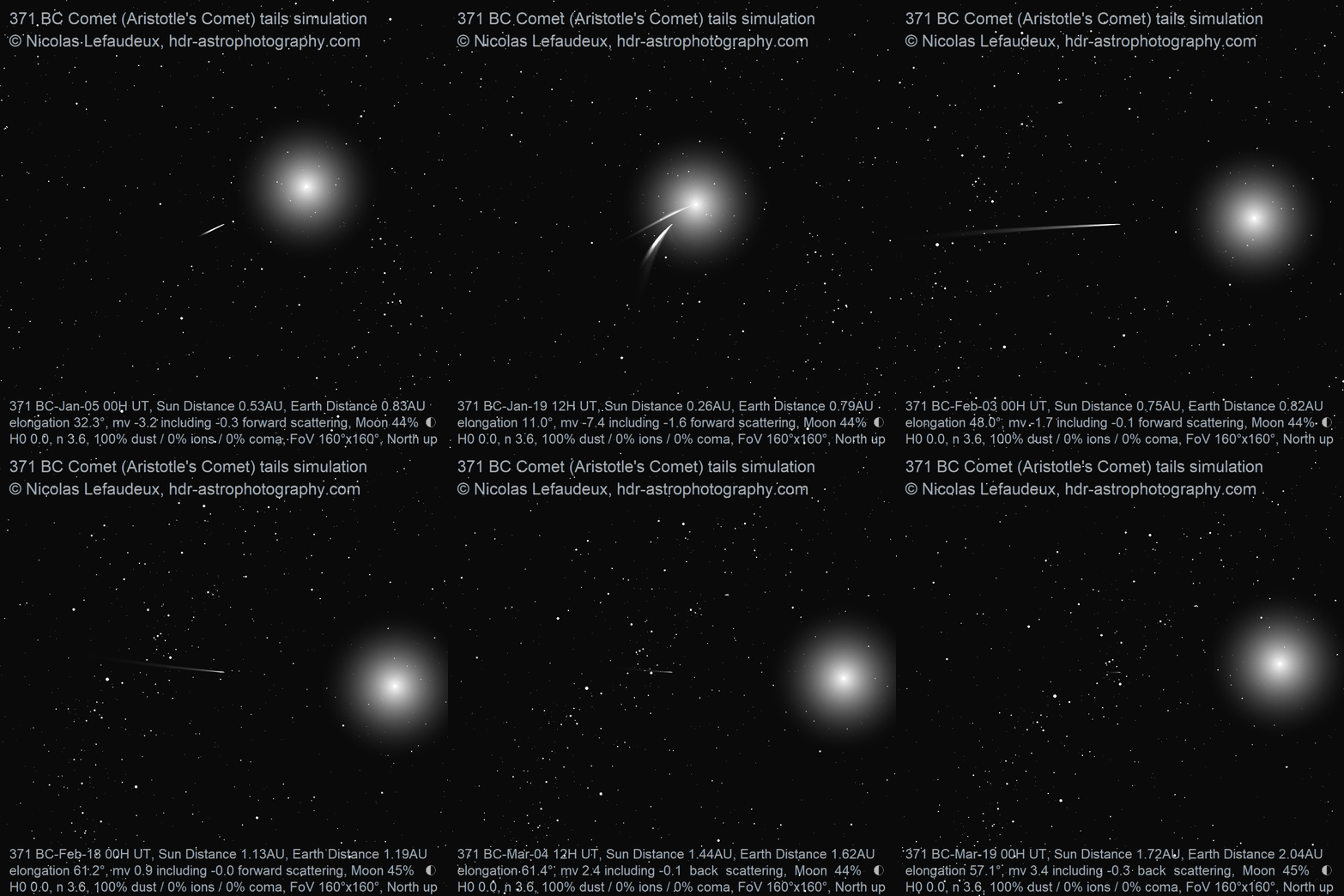
- -372/-371 BC comet, Aristotle’s comet, the mother of all Kreutz?
Nicknamed “Aristotle’s comet”, 372-371 BC comet has been suggested as the possible progenitor of the Kreutz comet family. Thus, I tried to simulate the possible appearance of 372-371 BC comet using the orbit of the bright Kreutz member C/1882 R1.
Quoting Wikipedia, “Aristotle wrote in Book 1 of Meteorologica[7]: “The great comet, which appeared about the time of the earthquake in Achaea and the tidal wave, rose in the west… The great comet… appeared during winter in clear frosty weather in the west, in the archonship of Asteius: on the first night it was not visible as it set before the sun did, but it was visible on the second, being the least distance behind the sun that would allow it to be seen, and setting immediately. Its light stretched across a third of the sky in a great band, as it were, and so was called a path. It rose as high as Orion’s belt, and there disappeared.”
Although the last sentence is ambiguous between the tail raising to Orion’s belt and disappearing, or the comet raising day after day and disappearing at Orion’s belt, I found that using a perihelion time around mid of January, the comet indeed rises progressively and disappears in March around Orion’s belt. Using a perihelion time around end of December makes the comet disappear more around Orion’s feet. On the other hand, simulations never make the tail disappear around Orion’s belt using a Kreutz orbit.
Thus, from this simulation, it seems that a Kreutz orbit is definitely compatible with the description and that the last sentence of the description would be applied to the comet raising progressively and ultimately disappearing in March around Orion’s belt.
Considering the Middle-Ages Kreutz comets of 1106 (bigger than H0~2), 1138 (H0~1), and possibly 1232 comet (bigger than H0~2), I simulated it with H0=0. With such value, the tail extremely bright, and reaches a maximum length around 80° at the end of January. There is no doubt that it would indeed have been one of the most spectacular comets ever. Still, the maximum tail length remains less than the one reported for 1106 comet.
 HDR astrophotography by Nicolas Lefaudeux
#/media/File:Comet_Pereyra_1963-09-23.jpg)