A beautiful photographic gaseous comet, slightly visible to the naked eye ?
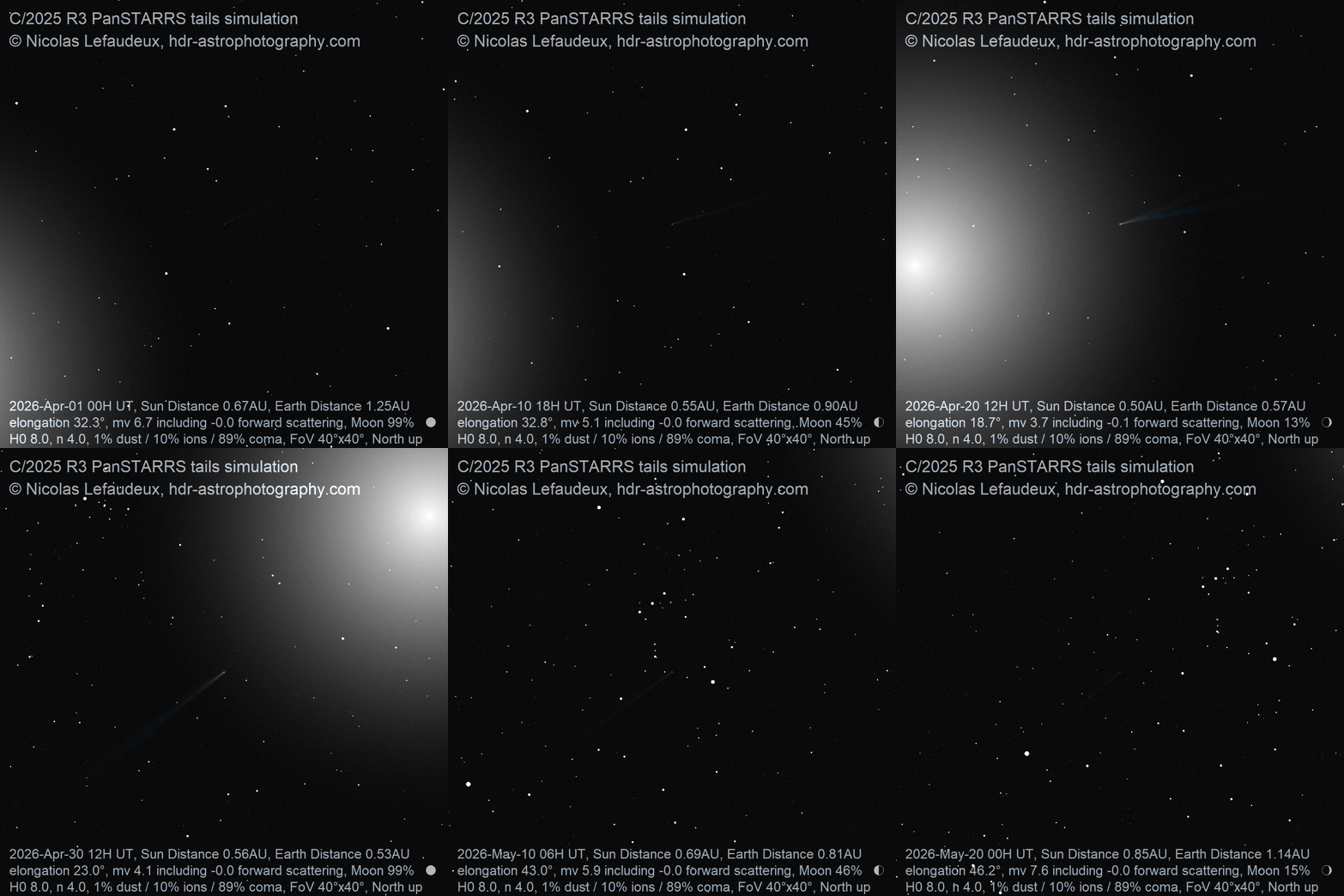
General comments on simulations: The simulations in this page are aimed to provide reasonable expectations in terms of tail length and shape. They can help anticipate how a comet apparition will unfold, when the highlight of the display should happen, and what the comet appearance should be. This is a useful tool for preparing to a comet apparition. Yet, due to the unpredictable future activity of the comet and the habit of comets to defy predictions, one should not think these simulations will perfectly forecast the exact shape and extend of the tails of the comets.
Comet C/2025 R3 PanSTARRS is a gaseous comet that has been performing better than initially expected. If this trend continues, it could reach naked-eye visibility and develop a nice ionic tail that could be beautifiul photographically and potentially active due to the fact that the highlight of the comet will happen at the time of perihelion. Some portion of this tail might even be detectable with binoculars.
Before the solar conjunction (April 25th), the comet is best placed for observers at low northern latitudes. During this period, the tail should develop progressively, although observations will start to be affected by moonlight at the beginning of April. Once the Moon’s interference subsides around April 14, the long ionic tail should become more apparent and could exceed about 10° in length photographically. Around that time, if the comet contains any significant amount of dust, a dust tail may also begin to show up. As the comet approaches solar conjunction, it will move into a strong forward-scattering geometry, which could greatly enhance even a faint dust component.
By about April 20, the comet will become increasingly difficult to observe as its elongation drops below 20°. Shortly afterward, between April 24 and 26, it will become visible and possibly spectacular in space-based coronagraphs while it is close to the Sun in the sky and no longer observable from the ground.
After solar conjunction, the comet becomes better placed for observers in the southern hemisphere. It should emerge from the Sun’s glare around April 29, at which point a notable antitail could appear if a dust tail has developed. However, full Moon interference will persist until about May 3. Once the Moon no longer interferes, this period could represent the highlight of the comet’s appearance, with the tail potentially reaching 15° or more in length photographically for a few days.
Afterward, the tail length will likely decrease rather quickly, although it could remain longer than about 10° until around May 10.
 HDR astrophotography by Nicolas Lefaudeux