Analyzing the display of past comets allowed to adjust the simulation parameters of the program. Simulating historical comets is extremely interesting. It helps to understand better some observation reports and reveals unexpected details. I will post later some analysis of historical comet displays.
- C/2023 A3 Tsuchinshan-ATLAS
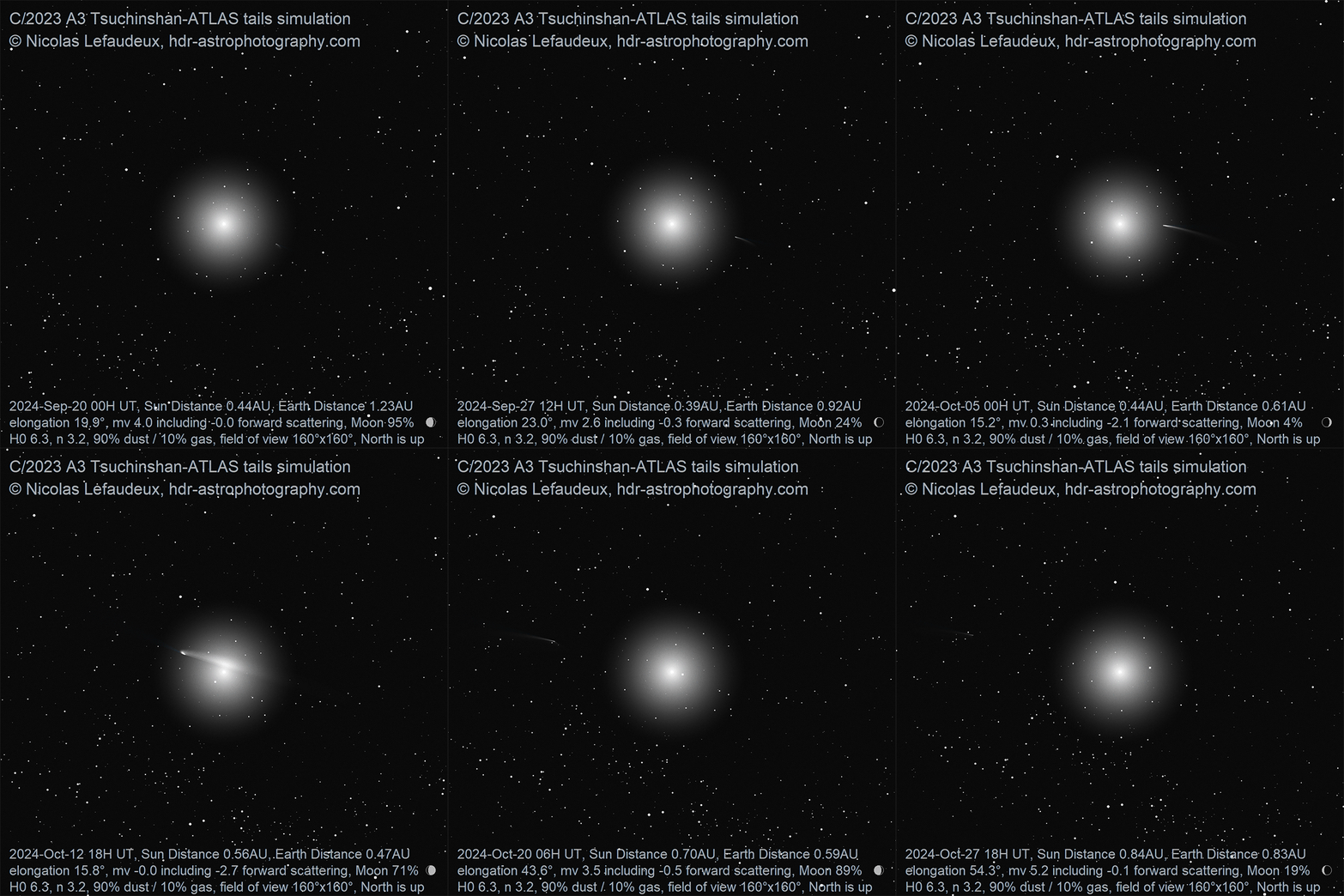
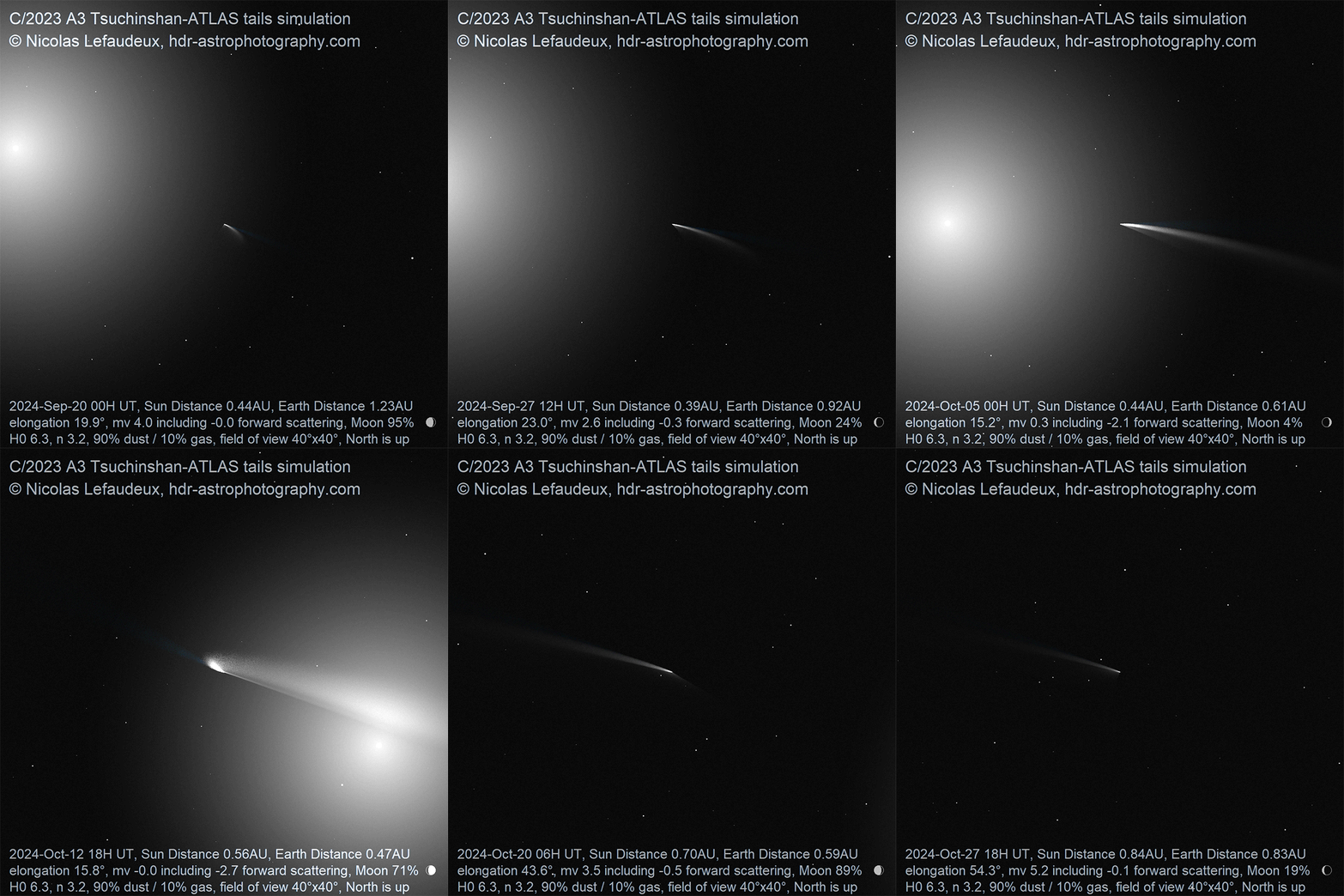
The simulations helped anticipate the appearance of the comet, with a first highlight between Spetmber 28th and October 2nd, and another one between October 14th and 18th. The simulation correctly anticipated the appearance of the dust tail in the period between between October 2nd and October 6th, with the head of the comet below horizon. The appearance of the comet in SOHO LASCO C3 field of view, with the shape of the tail as well as the long lasting antitail visible in LASCO C3 until orbital plane crossing on October 14th.
The simulation below have been updated taking into account that the antitail appeared not to have been enhanced with foward scattering, while the initial simulations published at the time of the comet appearance had the antitail tail enhanced by forward scattering and thus significantly stronger than it actually was.
- C/2020 F3 NEOWISE
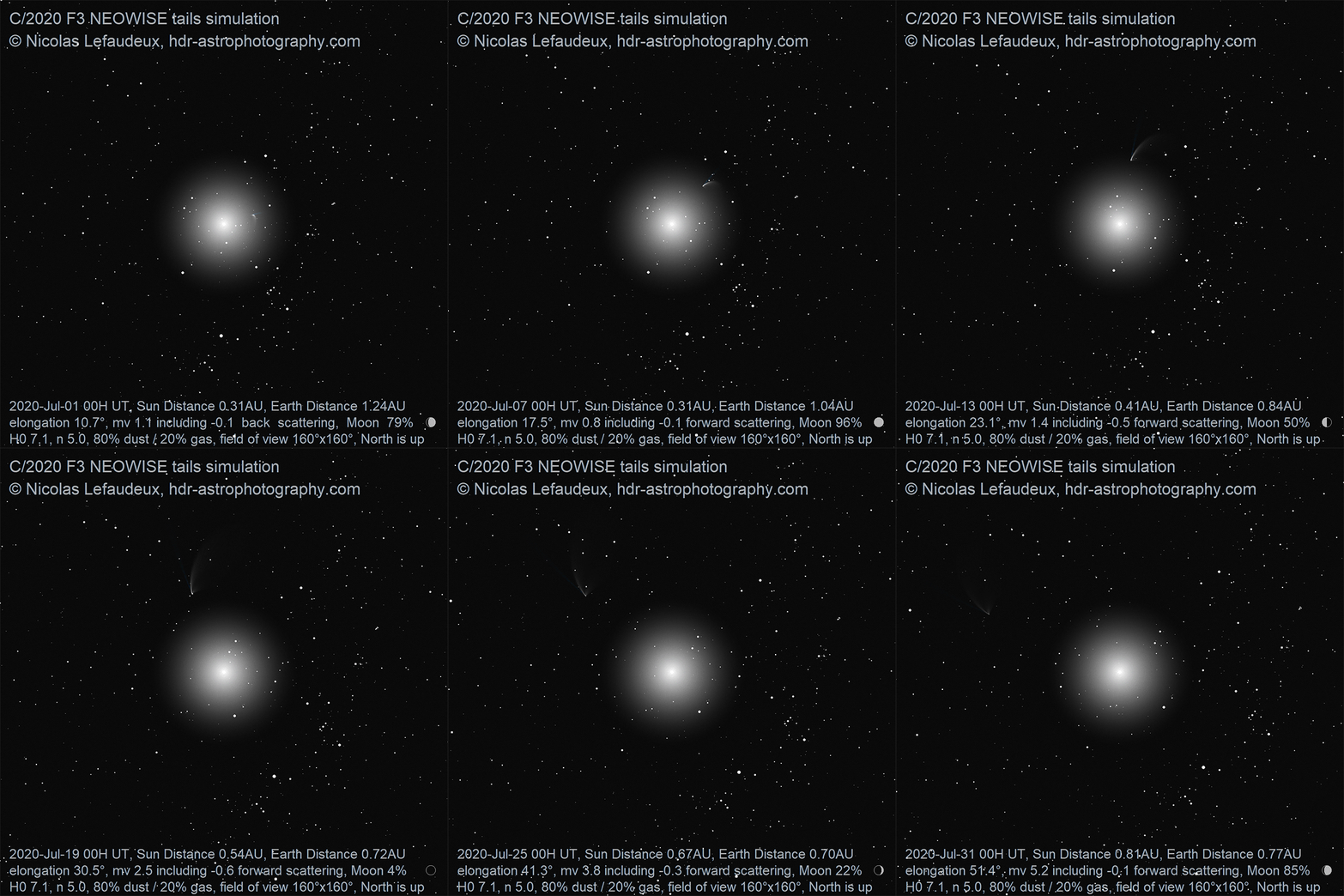
The simulations allow to identify the best time of the display, between July 11th and July 15th, as well as the shape and size of the comet dust tail with the presence of some striations, and the time when the gas tail was longest around 20th of July.
- C/2011 W3 Lovejoy
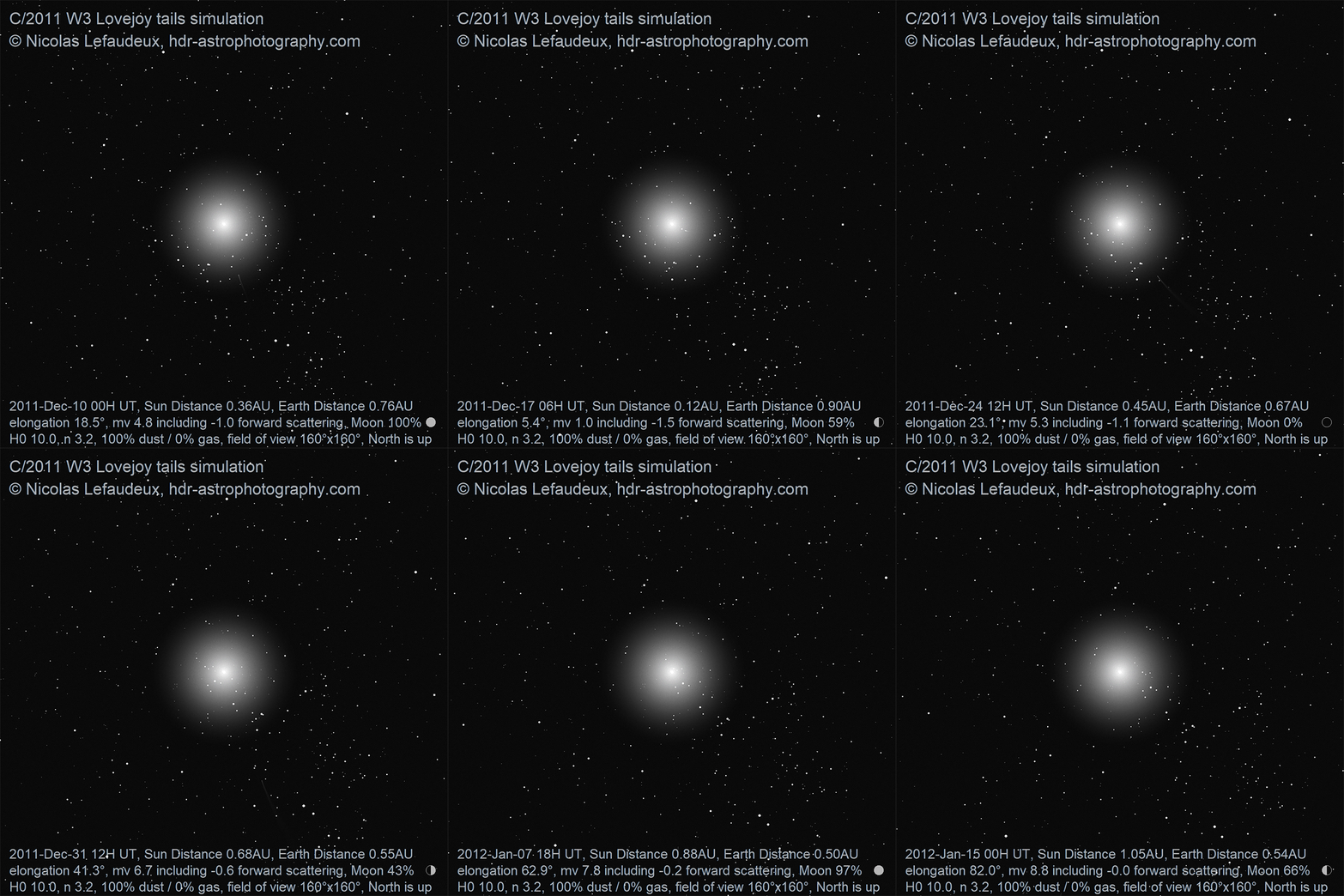
The simulations renders well the evaporation of the inbound tail as the comet arrives perihelion, as well as the growth of a new outbound tail after perihelion as recorded by SOHO spacecraft. Also, the outbound tail simulated is very long and very low surface brightness as was observed by southern hemisphere observers.
- C/2006 P1 McNaught
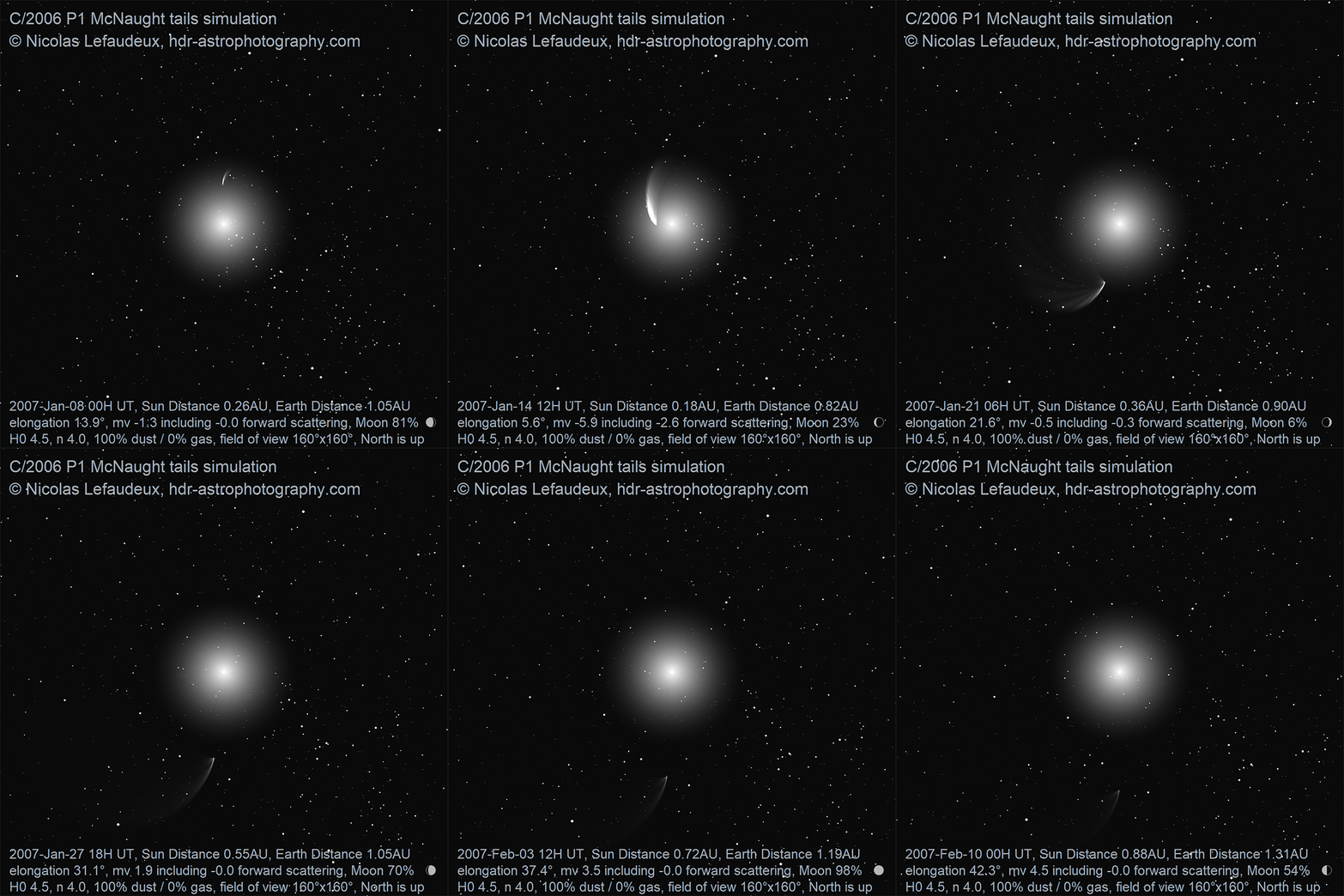
The simulations confirm how extraordinary comet McNaught was, and allows to identify correctly the highlight of the display between January 19th and January 25th. The main features are correctly simulated, with extensive but short-lived dust tail, with some parts visible from the northern hemisphere, and the strong striations present in the dust tail.
- C/2002 V1 NEAT
Comet C/2002 V1 NEAT had a perihelion distance similar to comet C/2024 G3 ATLAS, but it only reached a magnitude between -1 and -2 at perihelion. The simulation indeed shows that it was not enough for making a significant tail.

- C/1995 O1 Hale-Bopp
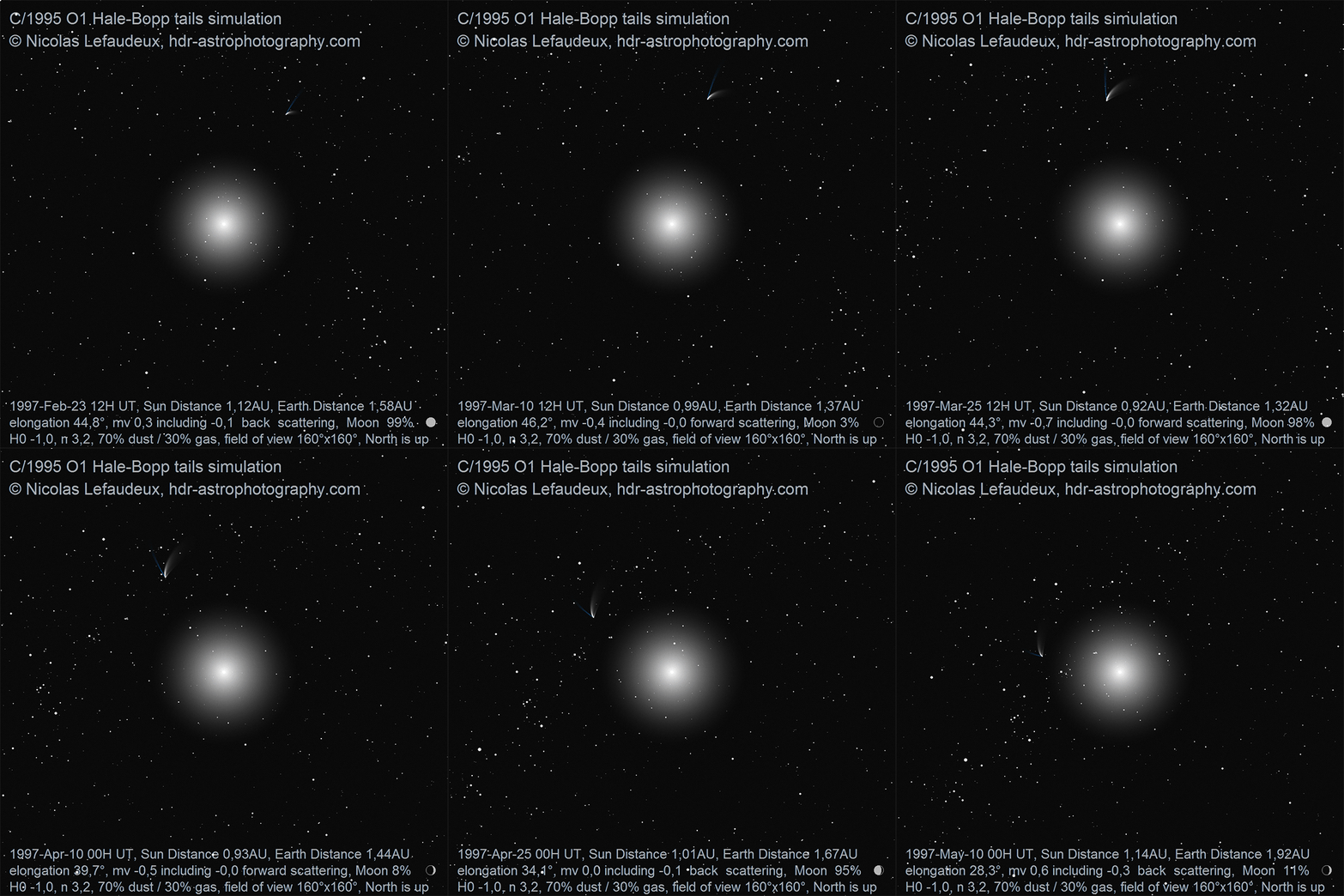
Comet Hale-Bopp displayed rather short but high surface-brightness tails, at large solar elongation during the whole spring 1997.
- C/1996 B2 Hyakutake
Comet Hyakutake dazzled the northern hemisphere observers with extremely long ion tail as it made a close encounter with Earth at only 0.1AU.

- C/1973 E1 Kouhoutek
The simulation shows well the shape of the tail of comet Kohoutek, with some short antitail. When the comet got out of sun glare, the moonlight interfered with its visibility. Starting around 12th of January, the moon was no longer interfering, allowing a 15°-20° tail to be visible. Yet at that time, the brightness of the tail had already decreased a lot compared to the period of 5th to 8th of January when it was intrinsically the brightest according to simulations.

- C/1969 Y1 Bennett
According to authors and observations, comet Bennett is either judged a great comet or not so great comet. Simulating the appearance of comet Bennett is quite interesting, as it appears quite similar to great comet Donati, albeit 1 magnitude fainter and a bit smaller in terms of tail extend on the simulations. Like comet Donati, it had large solar elongation, long duration and great tails. Yet, on many aspects, comet Bennett is also quite opposite to comet Donati! Comet Bennett was best placed for southern hemisphere, visible in the morning, and the best part of the display happened at the time of the full moon, the most unfortunate combination! from the simulation, the highlight of the appearance of comet Bennett was between 20th and 28th of March 1970, with an actual tail length around 30° according to simulations. Yet with the full moon, reports indicate tail length no longer than 10°. Indeed, the most impressive photographs of the comet are probably the ones from South Africa, showing great dust tail and very active gas tail. When the comet reached northern hemisphere visibility with reduced moon interference, at the beginning of April, the simulations show that the tail had decrease to around 15°, with a brightness notably reduced compared to 10 days earlier.

- C/1965 S1 Ikeya-Seki
The simulation renders well the shape, length and high surface brightness tail of Sungrazer comet Ikeya-Seki in the morning sky of October and November 1965.

- C/1956 R1 Arend-Roland
The simulations render well the long, straight dust tail of comet C/1953 R1 Arend-Roland, as well as the sharp, long, and long-duration anti-tail visible in the period of April 22nd to 28th. The simulations also indicates that comet Arend-Roland displayed a quite long dust tail before the solar conjunction that could have been visible while the head of the comet was still below horizon. Although i did not find any original report of it, it seems consistent with what is mentioned in “the bright-comet chronicles” that “about April 15, the head was of zero magnitude, trailing a 25-30 degree tail”.

- C/1927 X1 Skjellerup-Maristany
Comet Skjellerup-Maristany reached high brightness due to strong forward scattering enhancement in the period of December 14th to 16th 1927. Then its tail got visible as the comet head was still lost in the sun glare. The simulation renders well the ~40° degree long, low surface brightness tail sprouting up with comet head not visible, in the period of December 25th to January 2nd. After than the tail quickly lost brightness and disappeared.

- C/1874 H1 Coggia
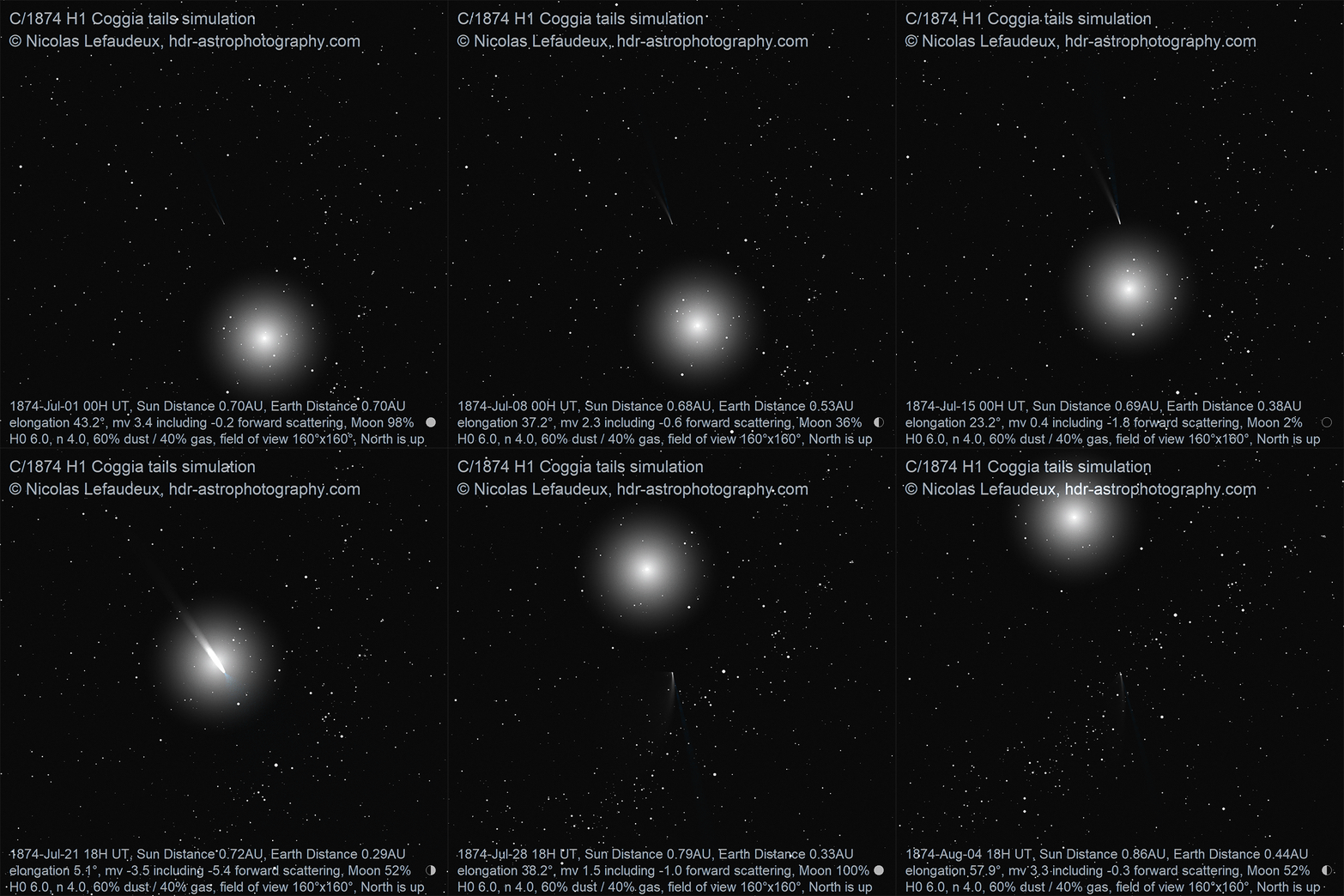
I had some hesitation deciding if the comet Coggia was mostly dust or mostly gas. The reason is that the spectroscopic observation mention both a continuum and gas, so both tails actually existed. However, only a single tail is mentioned, while gas tail and dust tail would have been separated. Thus, one of the tails must remained below visibility threshold.
The fact that the spectral lines of C2 were visible is not decisive point, as even in rather dusty comets, they could show up as they are located very near the peak sensitivity of the eye in scotopic vision. Also, both the dust tail and the gas tail were straight and narrow, making it impossible only from the description to simply discard one or the other.
So, I simulated both cases, and found that dust tail gave a much better overall match of descriptions than gas tail. Thus, it means that the gas tail must have remained below visibility threshold despite the fact that gas was spectroscopically observed. The reasons dust tail gives a better match are:
- the length of tail reported, as only 6° at the beginning of July, growing to 45° mid-July, matches well with the simulations for a dust tail. For a gas tail, the length should have been longer in the beginning of July.
- The fact that the tail length kept growing to eventually 60° to 70° as the comet was approaching solar conjunction between 16th and 23rd of July also matches the dust tail.
- The fact that Trouvelot reports that, on evening of July 21st, the tail reached the location of Gamma Ursa Majoris matches the expected location of the dust tail (beware, the Wikipedia page of comet Coggia mentions Gamma Ursa Minoris, while Trouvelot indeed mentions Gamma Ursa Majoris) while the gas tail was located in the southern hemisphere then.
- The fact that it is mentioned that comet Coggia last observation from the northern hemisphere was July 23rd. at this date, the comet head had passed solar conjunction, and the dust tail was still located in the northern hemisphere, while the gas tail was located in the southern hemisphere
- Also, Comet Coggia drawings show the narrow “dark streak” behind the nucleus, typical of dusty comets (shadow of the dense nucleus area).
This choice has one drawback, that being mostly dusty, the comet should have exhibited a spectacular increase of brightness due to forward scattering, bringing it to magnitude -4.5 when in solar conjunction. So it could have been visible in daylight while no observations were reported. However it should be noted that comet Coggia was very near Earth, and must have been “relatively large”. Thus, like comet Tsuchinshan-ATLAS, it seems probable that it would not have been observed visually in daylight despite its actual brightness.
- C/1858 L1 Donati
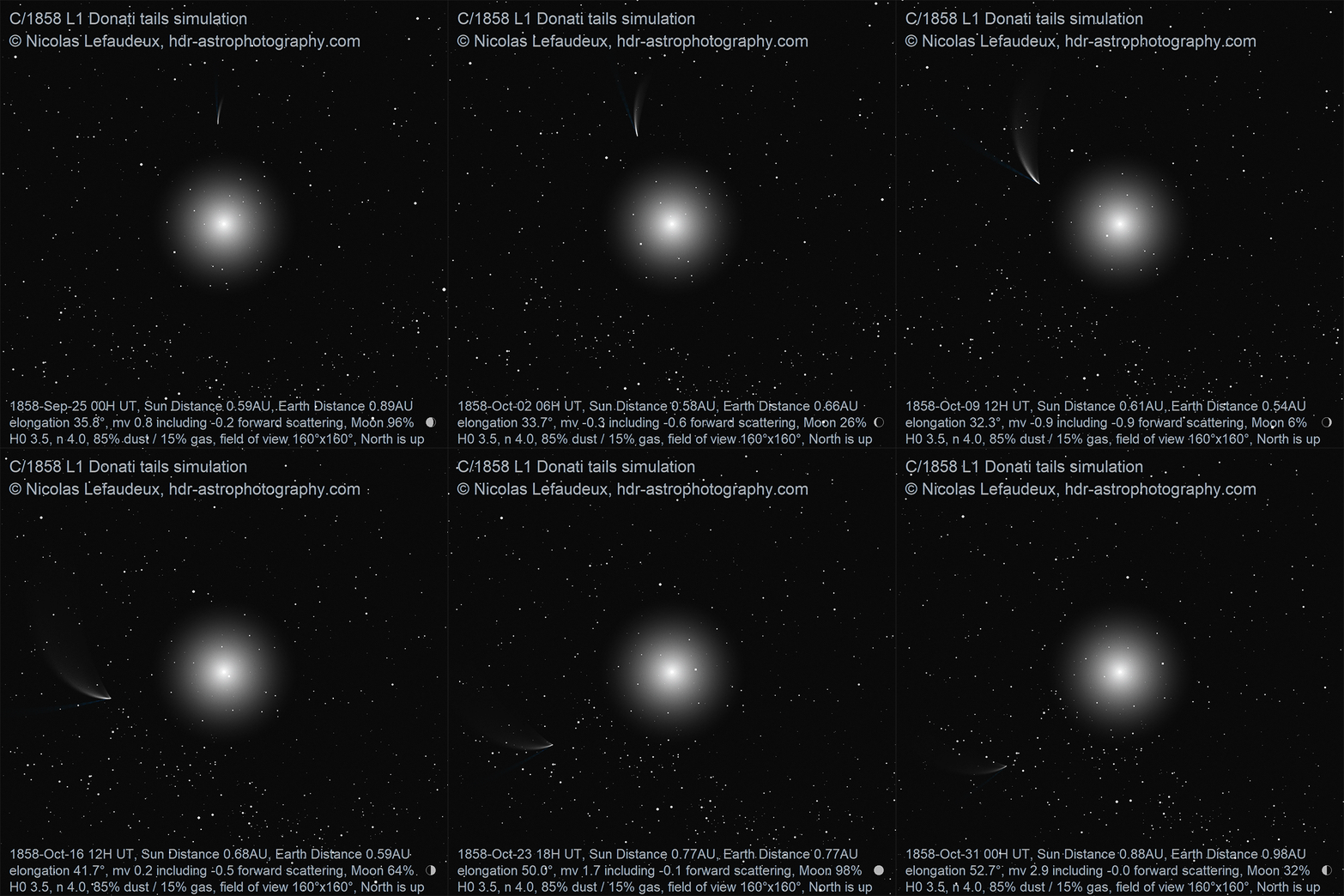
Comet Donati is one of the most famous great comets. it was visible at large solar elongation, best placed for the northern hemisphere, in the evening, and for almost a full month. According to the simulations, the highlight of the display was between 1st and 20th of October 1858. During this period, the comet magnitude remained stable between magnitude 0 and -1, and the comet tail grew from less than 20° to more than 40° long while getting progressively less contrasted. At the end of the period, the moon light started to interfere with the view reducing the visible tail length.
- C/1743 X1 Cheseaux
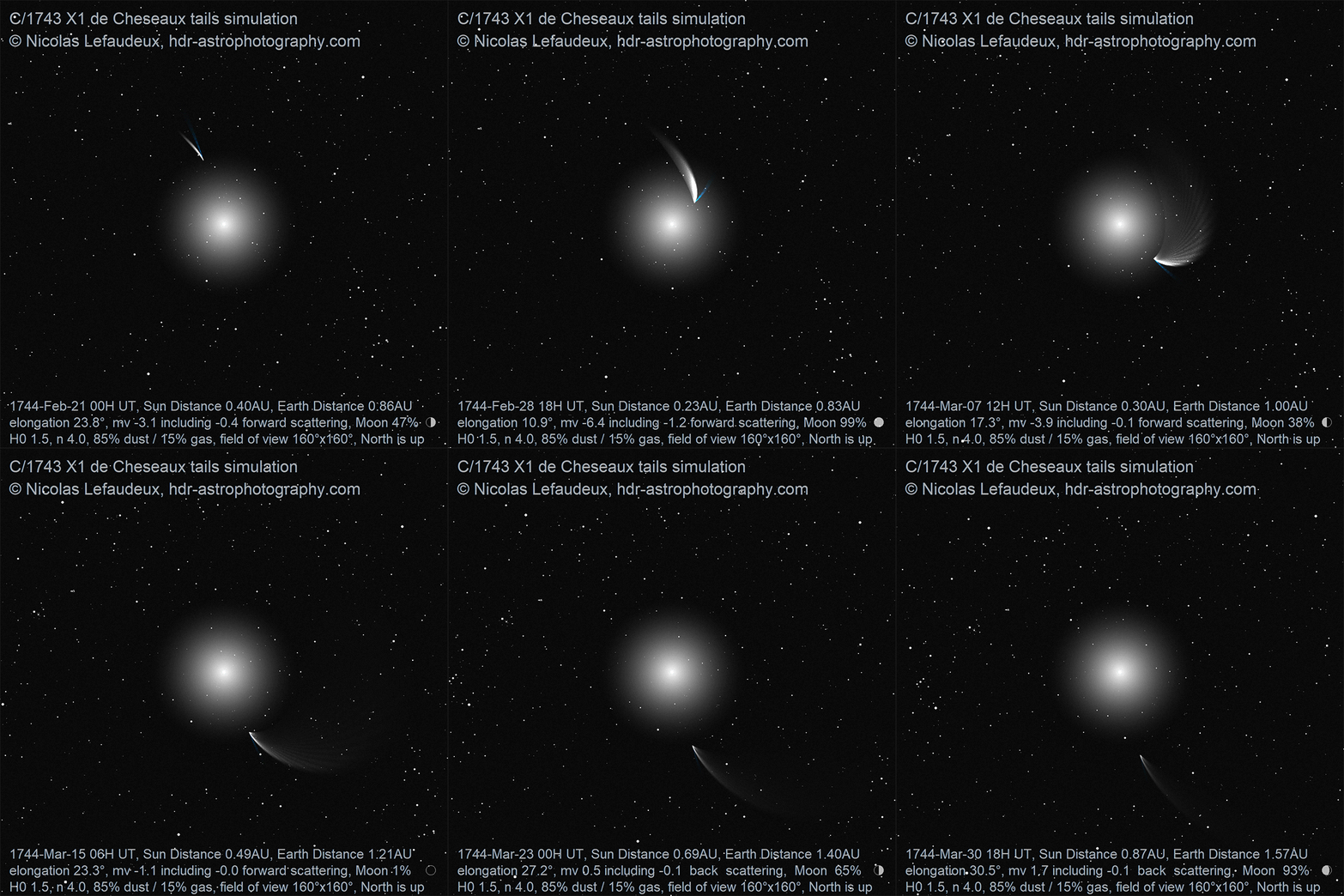
Comet Cheseaux is famous for having displayed a huge tail visible from northern hemisphere while the comet head was only visible from southern hemisphere. For this, it has been compared to comet McNaught. Yet, while comet McNaught was an average size comet significantly boosted by forward scattering, comet Cheseaux was a huge comet with absolute magnitude similar to Hale-Bopp. Even two weeks before perihelion, it was reported to be as bright as Venus. The simulation indeed renders the huge fanned tailed, with strong striation, but also show that the fanned tail must have been MUCH brighter than the one of comet McNaught. It seems that a fairer comparison would be to compare McNaught to a mini-Cheseaux comet!
- C/1680 V1 Kirch
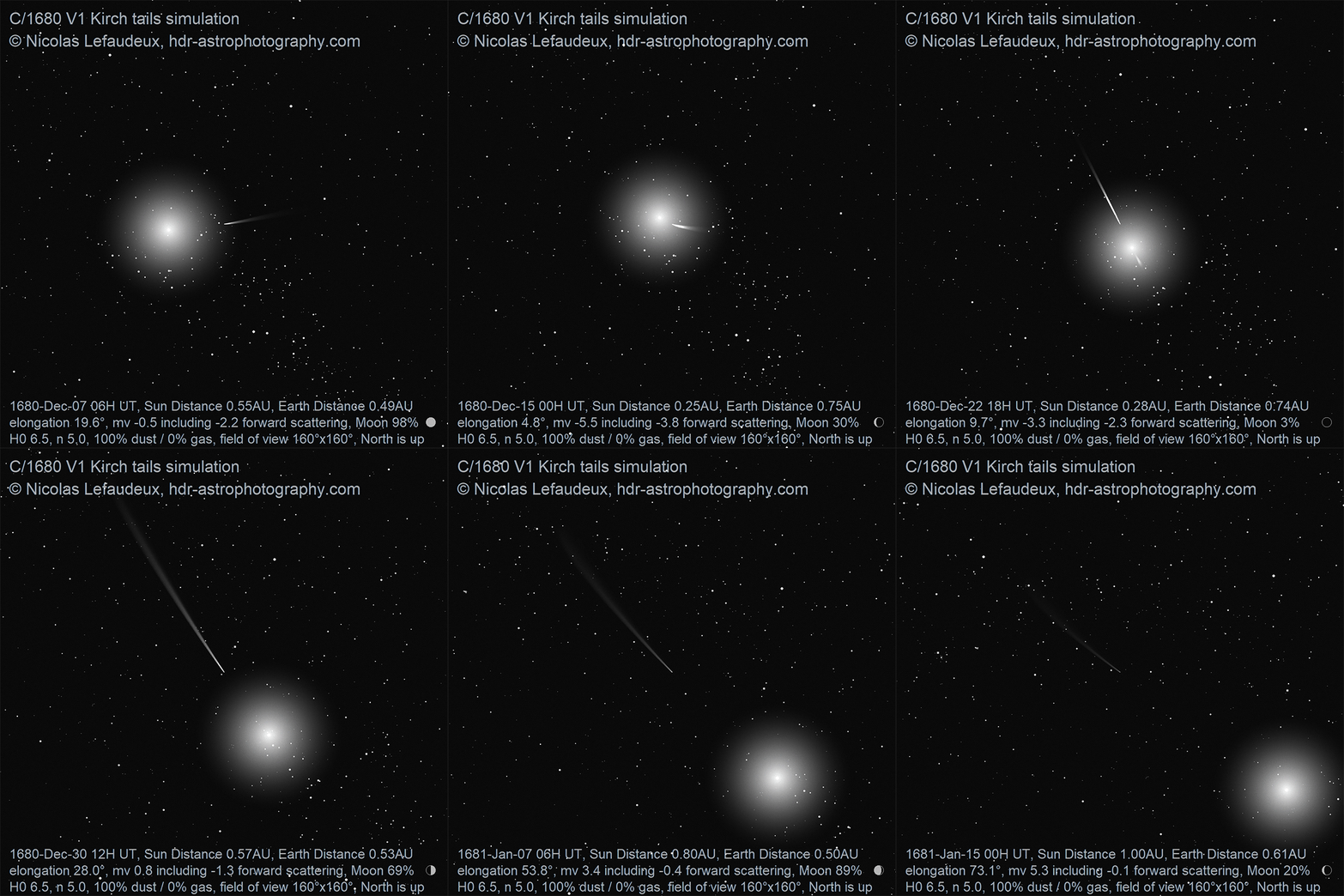
Comet Kirch was the greatest comet of the 17th century. It was a rare “non-Kreutz” sungrazer comet, with a perihelion distance even smaller than the Kreutz family. On top of it, the geometric circumstances were very good for Earth. The comet passed perihelion behind the sun and then was hurled by the Sun in the direction of the Earth, with a minimum Earth distance of 0.5AU (notably closer than all of the main Kreutz sungrazers), and perfect position for northern hemisphere. All of this contributed to make comet Kirch one of the best sungrazer comet in recorded history, with an extremely bright tail reaching 90° at the end of year 1680. In order to be able to simulate the correct tail length, I had to use a n=5 slope parameter to have sufficient dust production near sun. With the standard n=4 slope parameter, the tail reached no more than 60° length. The simulation show the extraordinary growth speed of the tail: a few degrees on December 19th, 40° on 22nd, 60° on 25th, and 90° on 28th. Then the decrease of tail length also matches the observations, with 50° on January 8th and 40° on January 15th. The only notable discrepancy is the tail length reported by Pontio of 70° on December 22nd.
- C/905 K1 Great Comet of 905
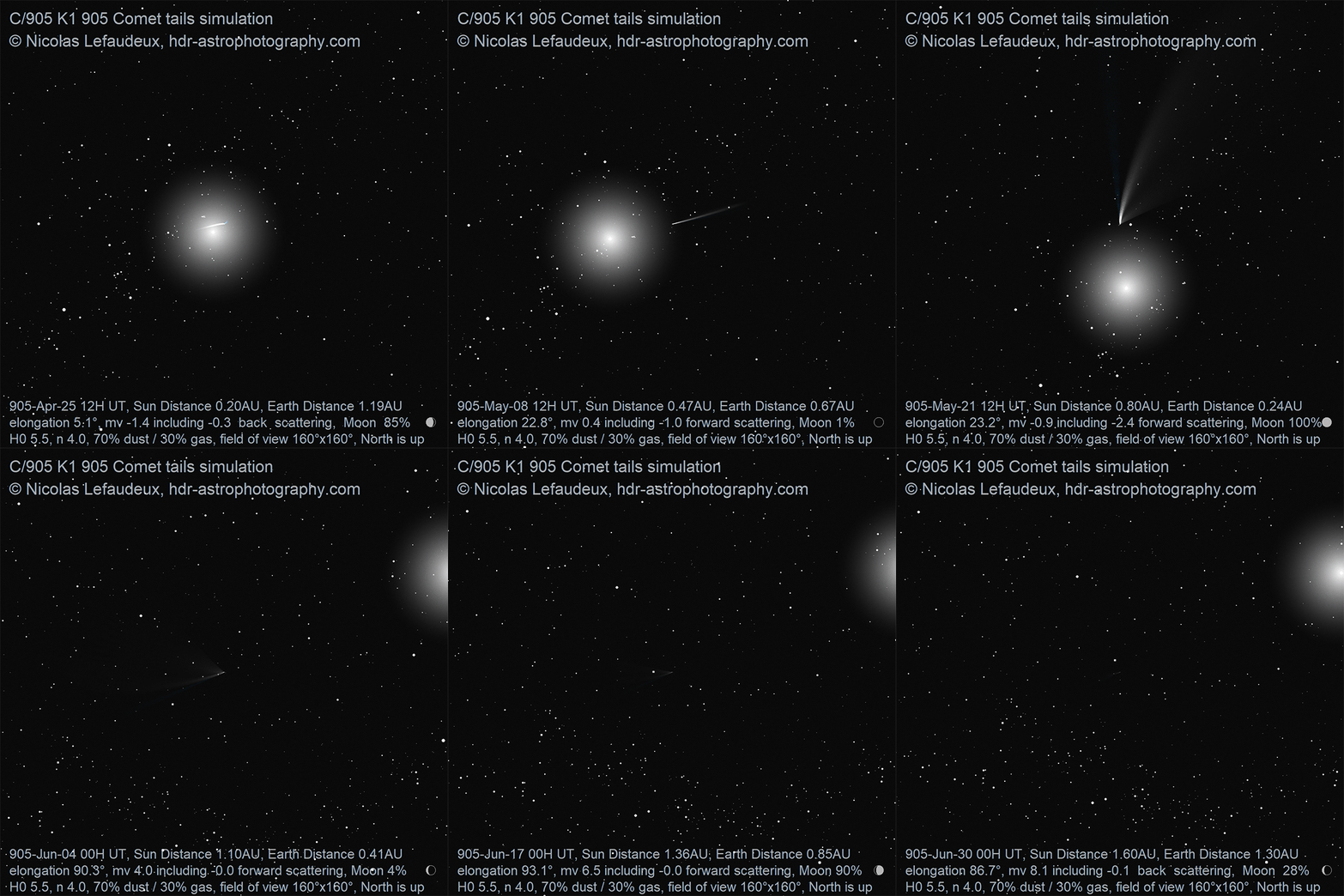
A great comet was visible in year 905. I simulated it using Hasegawa orbit. This comet was discovered around May 18th by various civilizations around the globe. According to the simulations using this orbit, the comet should have been discovered around May 4th or 5th, and have been an extremely great object in the morning sky with more than 20°, bright tail as early as May 7th, with tail growing to around 50° on May 12th. Furthermore, the moon was not interfering with the view at that time, and such an object being missed looks very odd. Thus it seems that the orbit of the comet might be wrong, and that the comet must have had a much lower elongation before discovery to prevent it from being visible.
- 1P Halley, 837
Comet 1P Halley made its closest Earth approach in 837 AD. It appeared in March, and moved little accros the sky for the whole month as it approach almost straight toward Earth. Its tails steadily increased in length, from less than 10° mid March, more than 30° at the end of the month, and more than 60° around April 8th. Then the closest approach made the geometry change very quickly, going to an unusual geometry as the comet got behind the Earth, and was seen almost “face on” at the time of closest approch on April 10th. This “face on” geometry made the comet appear smaller than a few days ago, and with unusual “curved” appearance, but great brightness, and in the middle of the night ! A the time of closest approach, the comet tails were no more 30° long. As the comet recedes from Earth, the tail got longer again and took back a more regular “straight” appearance, reaching more than 80° between April 12th and 15th. Then the tail length and comet brightnesss decreased very quickly at the same time as the moon began to interfere with the view.

- -372/-371 BC comet, Aristotle’s comet
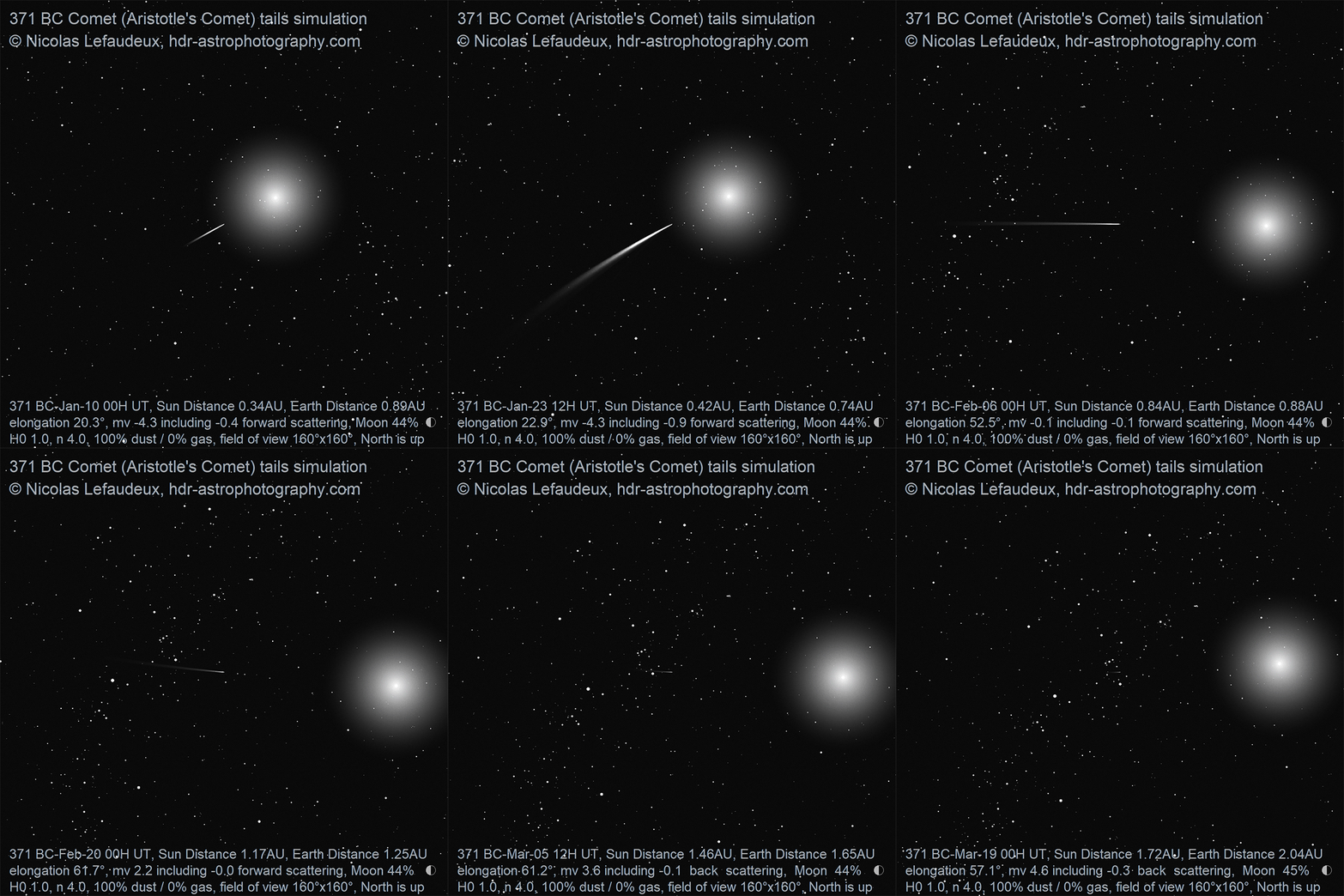
Nicknamed “Aristotle’s comet”, 372-371 BC comet has been suggested as the possible progenitor of the Kreutz comet family. Thus, I tried to simulate the possible apperance of 372-371 BC comet using the orbit of the bright Kreutz member C/1882 R1.
Quoting Wikipedia, “Aristotle wrote in Book 1 of Meteorologica[7]: “The great comet, which appeared about the time of the earthquake in Achaea and the tidal wave, rose in the west… The great comet… appeared during winter in clear frosty weather in the west, in the archonship of Asteius: on the first night it was not visible as it set before the sun did, but it was visible on the second, being the least distance behind the sun that would allow it to be seen, and setting immediately. Its light stretched across a third of the sky in a great band, as it were, and so was called a path. It rose as high as Orion’s belt, and there disappeared.”
although the last sentence is ambiguous between the tail raising to Orion’s belt and disappearing, or the comet raising day after day and disappearing at Orion’s belt, I found that using a perihelion time around mid of January, the comet indeed rises progressively and disappears in March around Orion’s belt. Using a perihelion time around end of December makes the comet disappear more around Orion’s feet. On the other hand, simulations never make the tail disappear around Orion’s belt using a Kreutz orbit.
Thus from these simulation, it seems that a Kreutz orbit is definitely compatible with the description and than the last sentence of the description would be apply to the comet raising progressively and ultimately disappearing in March around Orion’s belt.
For Kreutz comets, I used a rule that, at each perihelion, the absolute magnitude of the sungrazers decrease of 1 magnitude because of splitting/loss of material (19th and 20th century main Kreutz members were around absolute magnitude of 4, 11th and 12th century Kreutz are assumed to have been of absolute magnitude of 3, 4th century Kreutz absolute magnitude of 2, and this progenitor absolute magnitude of 1)
 HDR astrophotography by Nicolas Lefaudeux