- C/1995 O1 Hale-Bopp
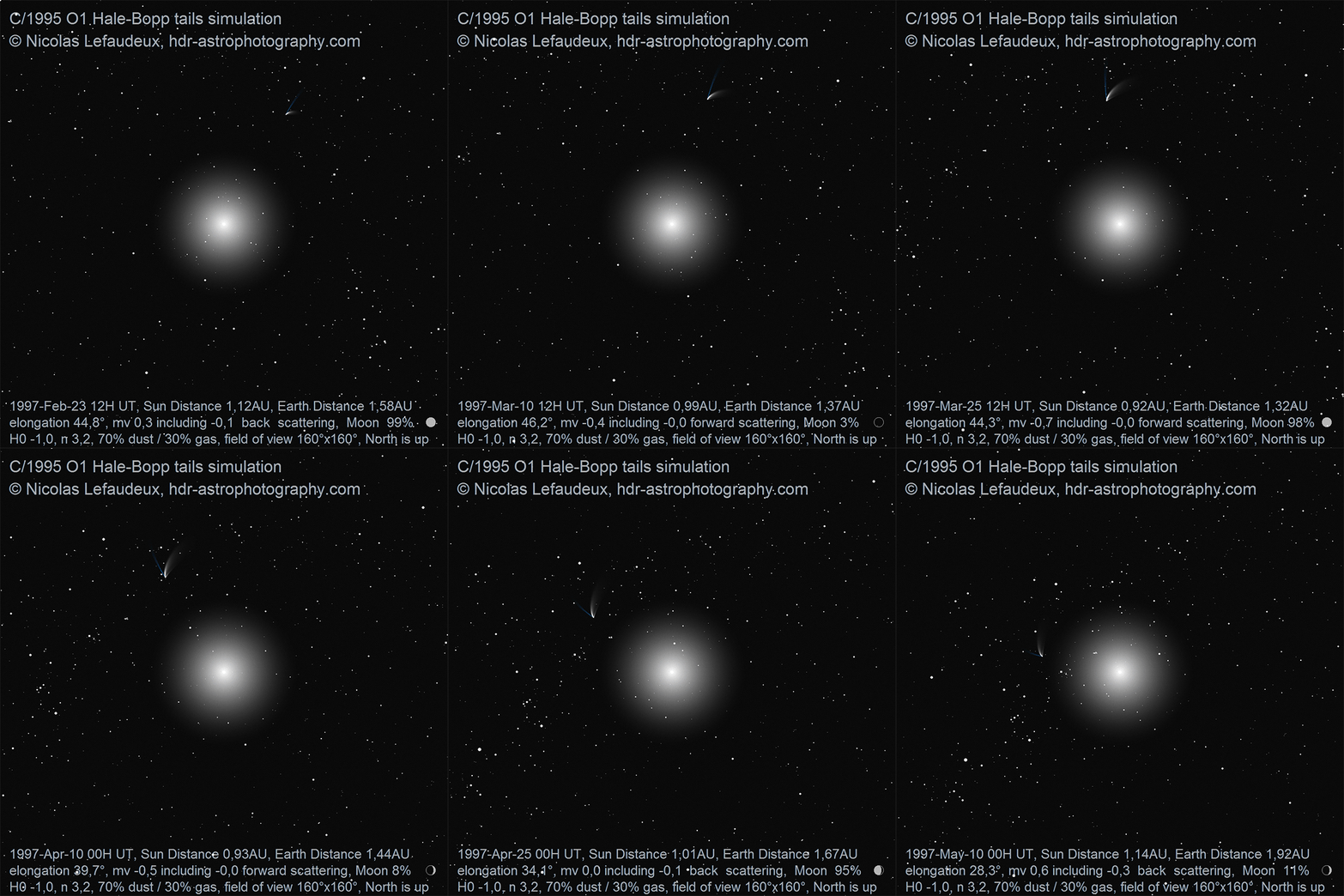
Comet Hale-Bopp displayed rather short but high surface-brightness tails, at large solar elongation during the whole spring 1997.
- C/1996 B2 Hyakutake
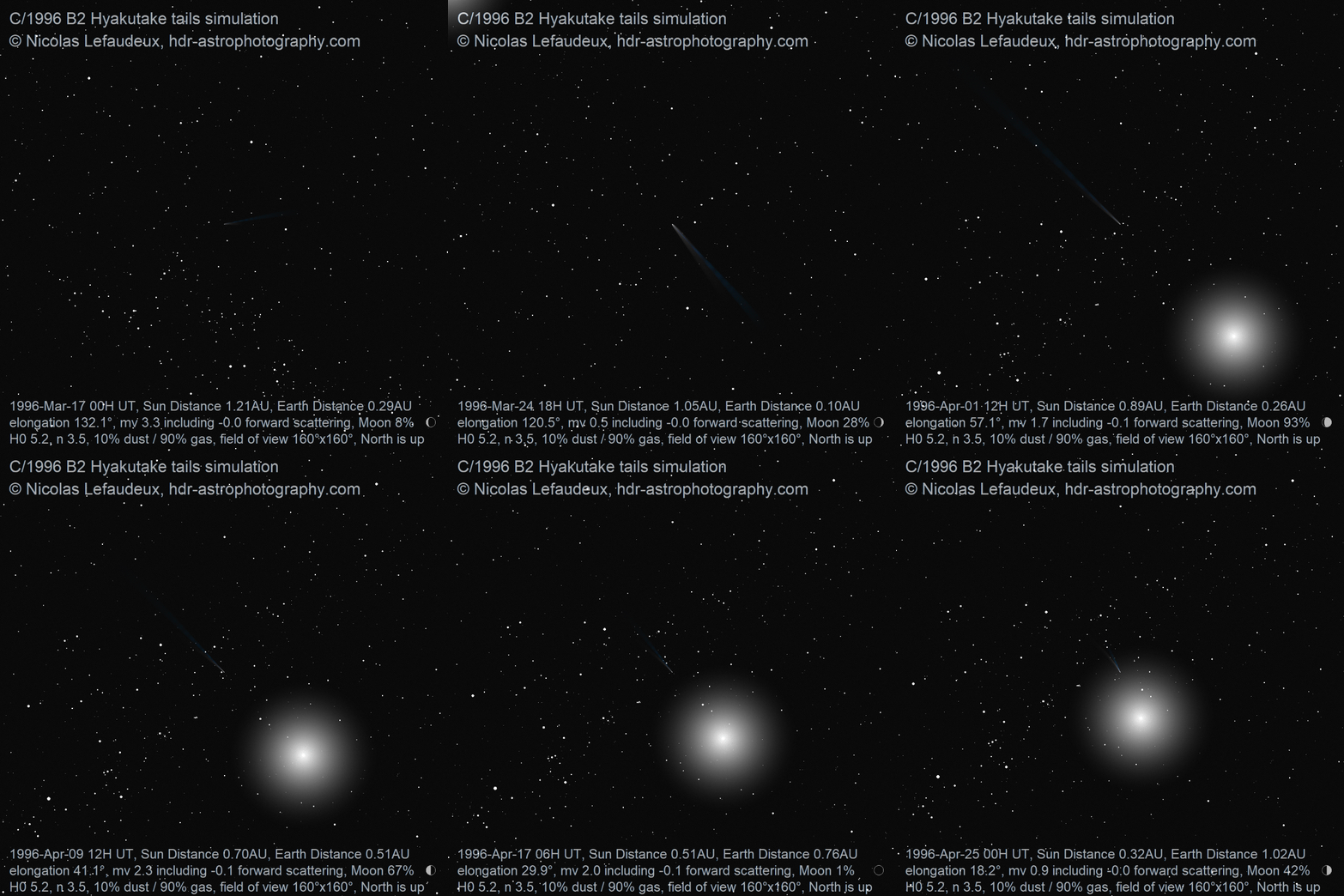
Comet Hyakutake dazzled the northern hemisphere observers with extremely long ion tail as it made a close encounter with Earth at only 0.1AU.
- C/1975 V1 West
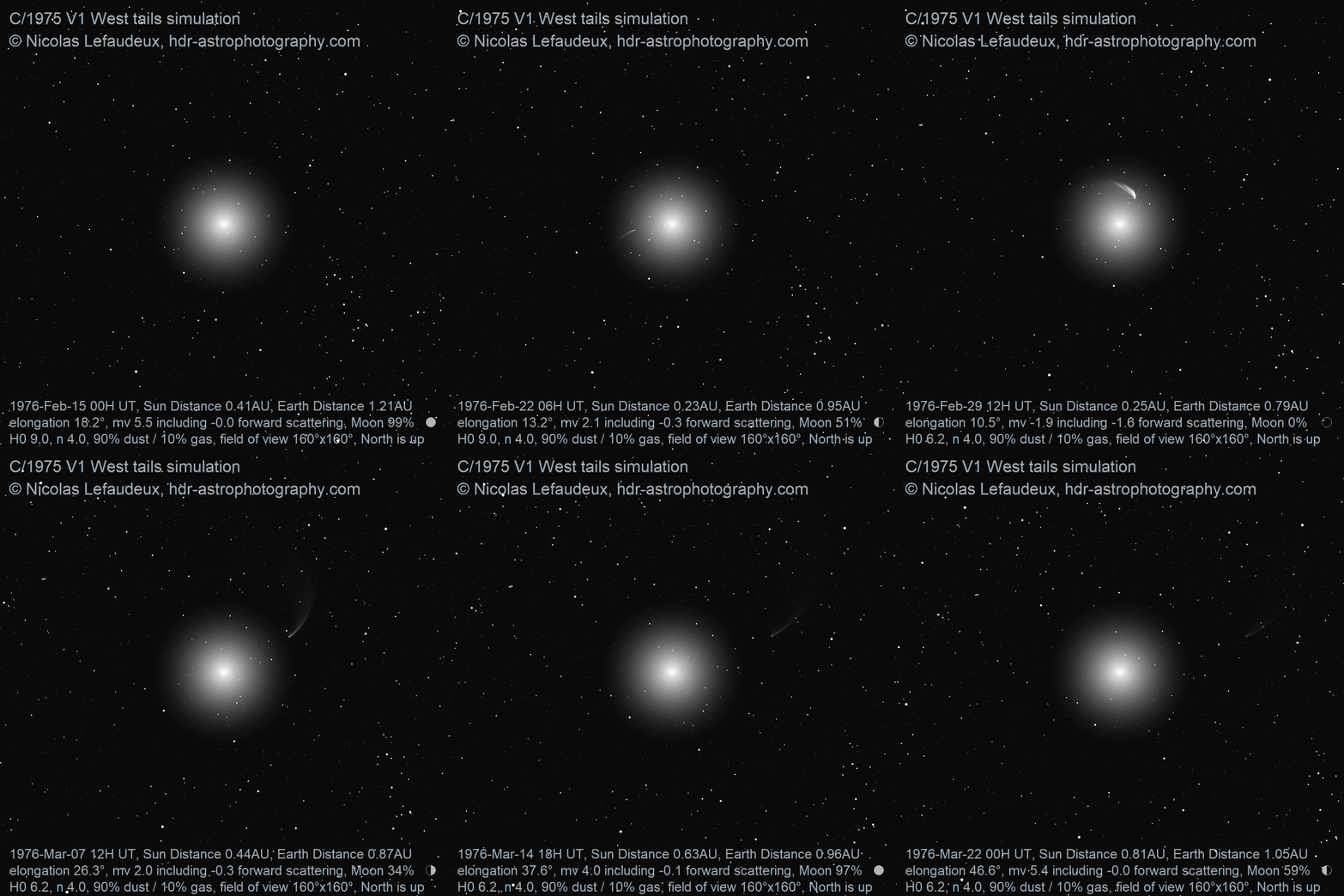
Comet West was one of the greatest comet of the 20th century. It is usually emphasized that its greatness was caused by its breakup near perihelion which caused a bright outburst and massive release of dust. The simulation also shows that the comet had very favorable geometric circumstances that allowed for the visibility of the striated dust tail with significant forward scattering, while getting rather quickly out of the sun glare. This is clearly the combination of the breakup of the nucleus with these favorable circumstances that allowed for the greatness of the comet, if one of the two had been missing, the comet would not have been as spectacular.
To simulate the comet, I updated my calculations to take into account the breakup of the nucleus, with a time-varying absolute magnitude H0.
The simulation renders well the bright and curved dust tail, unfolding between March 2nd and March 7th. Initially bright, curved and about 15° long, its shape changed to a rather triangular appearance while increasing in length to reach about 30° length between March 5th and March 7th. Overall, the highlight of the apparition was only a few days (March 3rd to March 6th), when the comet had sufficient elongation before fading quickly.
- C/1973 E1 Kouhoutek
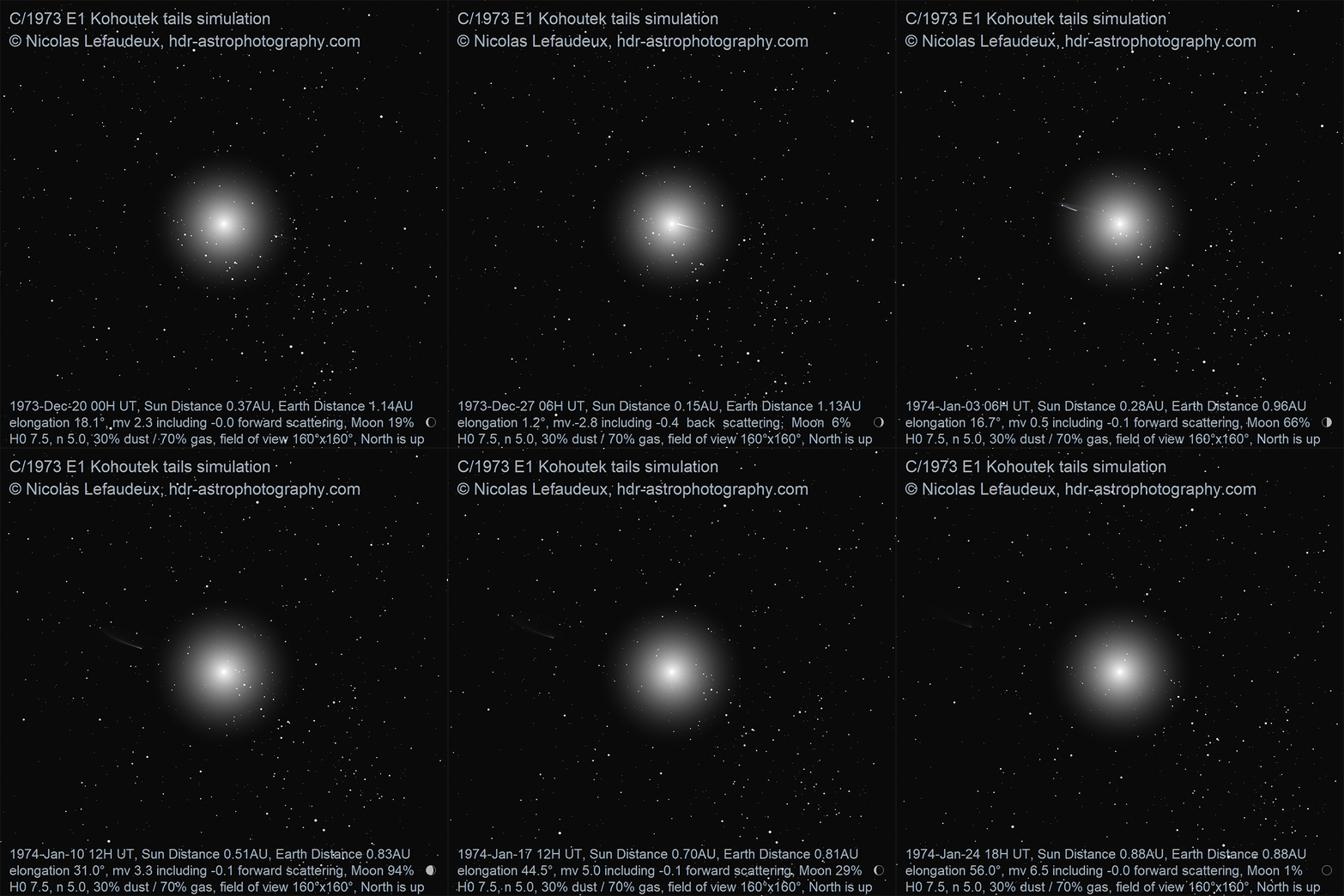
The simulation shows well the shape of the tail of comet Kohoutek, with some short antitail. When the comet got out of sun glare, the moonlight interfered with its visibility. Starting around 12th of January, the moon was no longer interfering, allowing a 15°-20° tail to be visible. Yet at that time, the brightness of the tail had already decreased a lot compared to the period of 5th to 8th of January when it was intrinsically the brightest according to simulations.
- C/1970 K1 White-Ortiz-Bolelli: see the page dedicated to simulations of Kreutz comets
- C/1969 Y1 Bennett
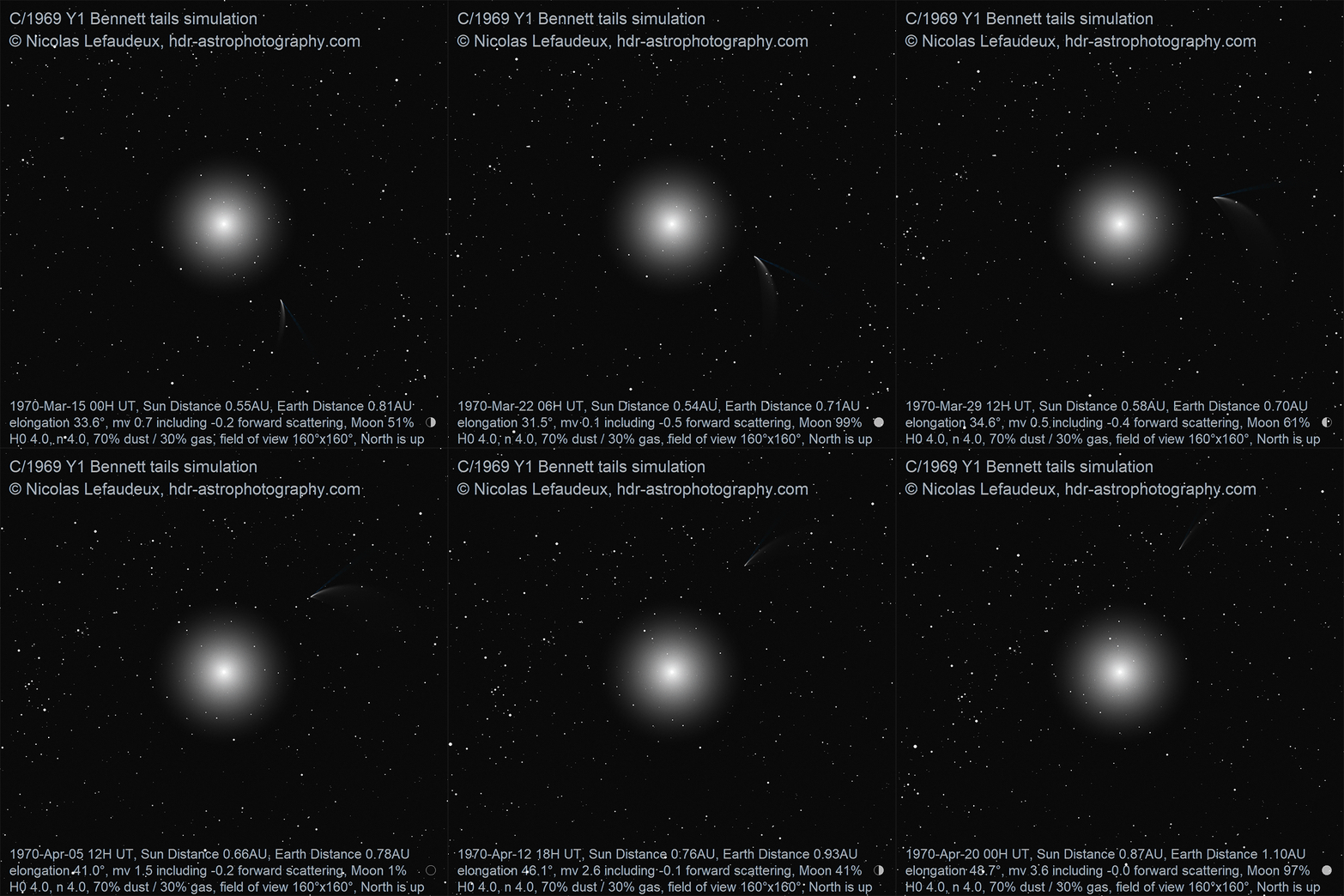
According to authors and observations, comet Bennett is either judged a great comet or not so great comet. Simulating the appearance of comet Bennett is quite interesting, as it appears quite similar to great comet Donati, albeit 1 magnitude fainter and a bit smaller in terms of tail extend on the simulations. Like comet Donati, it had large solar elongation, long duration and great tails. Yet, on many aspects, comet Bennett is also quite opposite to comet Donati! Comet Bennett was best placed for southern hemisphere, visible in the morning, and the best part of the display happened at the time of the full moon, the most unfortunate combination! from the simulation, the highlight of the appearance of comet Bennett was between 20th and 28th of March 1970, with an actual tail length around 30° according to simulations. Yet with the full moon, reports indicate tail length no longer than 10°. Indeed, the most impressive photographs of the comet are probably the ones from South Africa, showing great dust tail and very active gas tail. When the comet reached northern hemisphere visibility with reduced moon interference, at the beginning of April, the simulations show that the tail had decrease to around 15°, with a brightness notably reduced compared to 10 days earlier.
- C/1965 S1 Ikeya-Seki: see the page dedicated to simulations of Kreutz comets
- C/1963 R1 Pereyra: see the page dedicated to simulations of Kreutz comets
- C/1956 R1 Arend-Roland
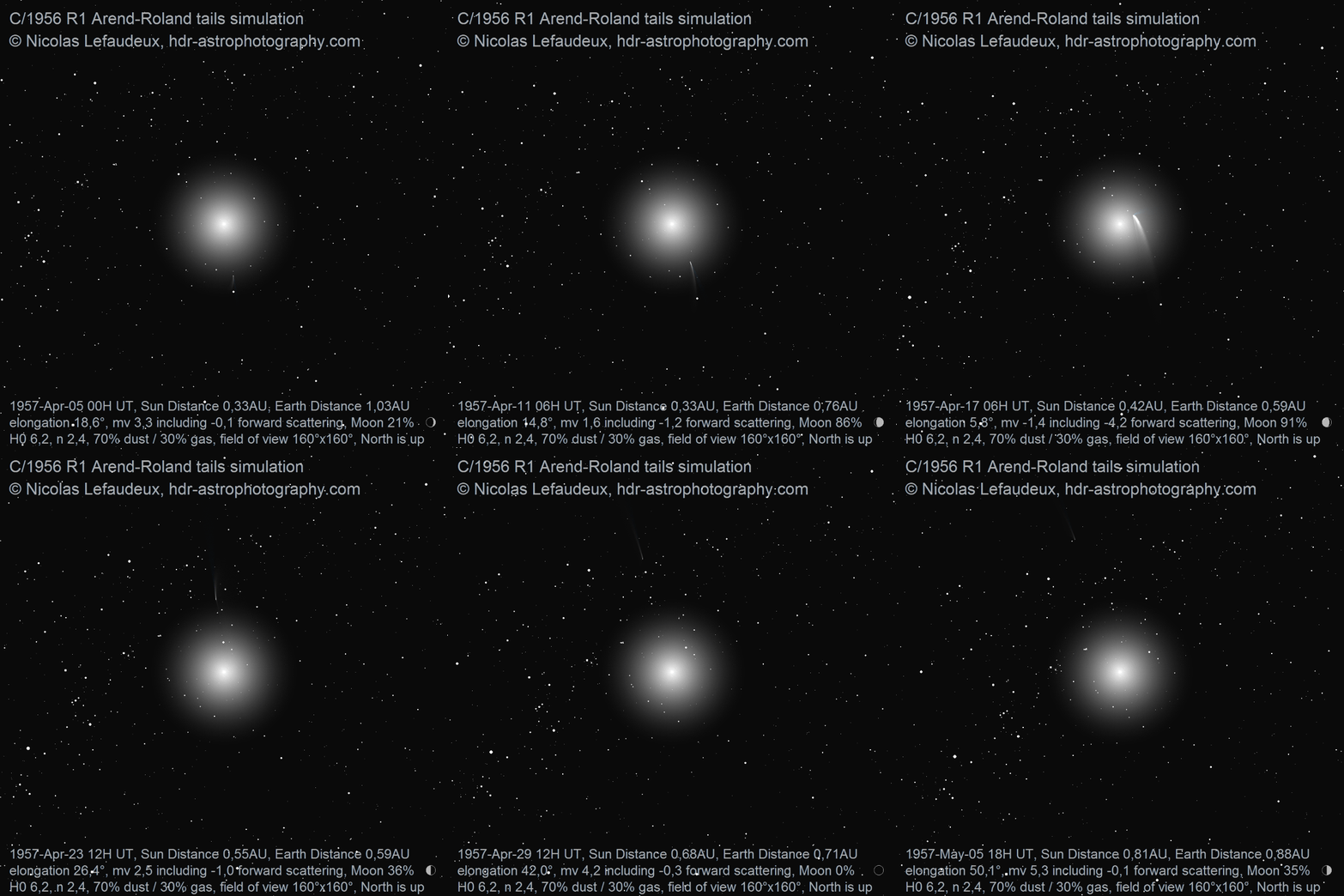
The simulations render well the long, straight dust tail of comet C/1953 R1 Arend-Roland, as well as the sharp, long, and long-duration anti-tail visible in the period of April 22nd to 28th. The simulations also indicates that comet Arend-Roland displayed a quite long dust tail before the solar conjunction that could have been visible while the head of the comet was still below horizon. Although i did not find any original report of it, it seems consistent with what is mentioned in “the bright-comet chronicles” that “about April 15, the head was of zero magnitude, trailing a 25-30 degree tail”.
- C/1927 X1 Skjellerup-Maristany
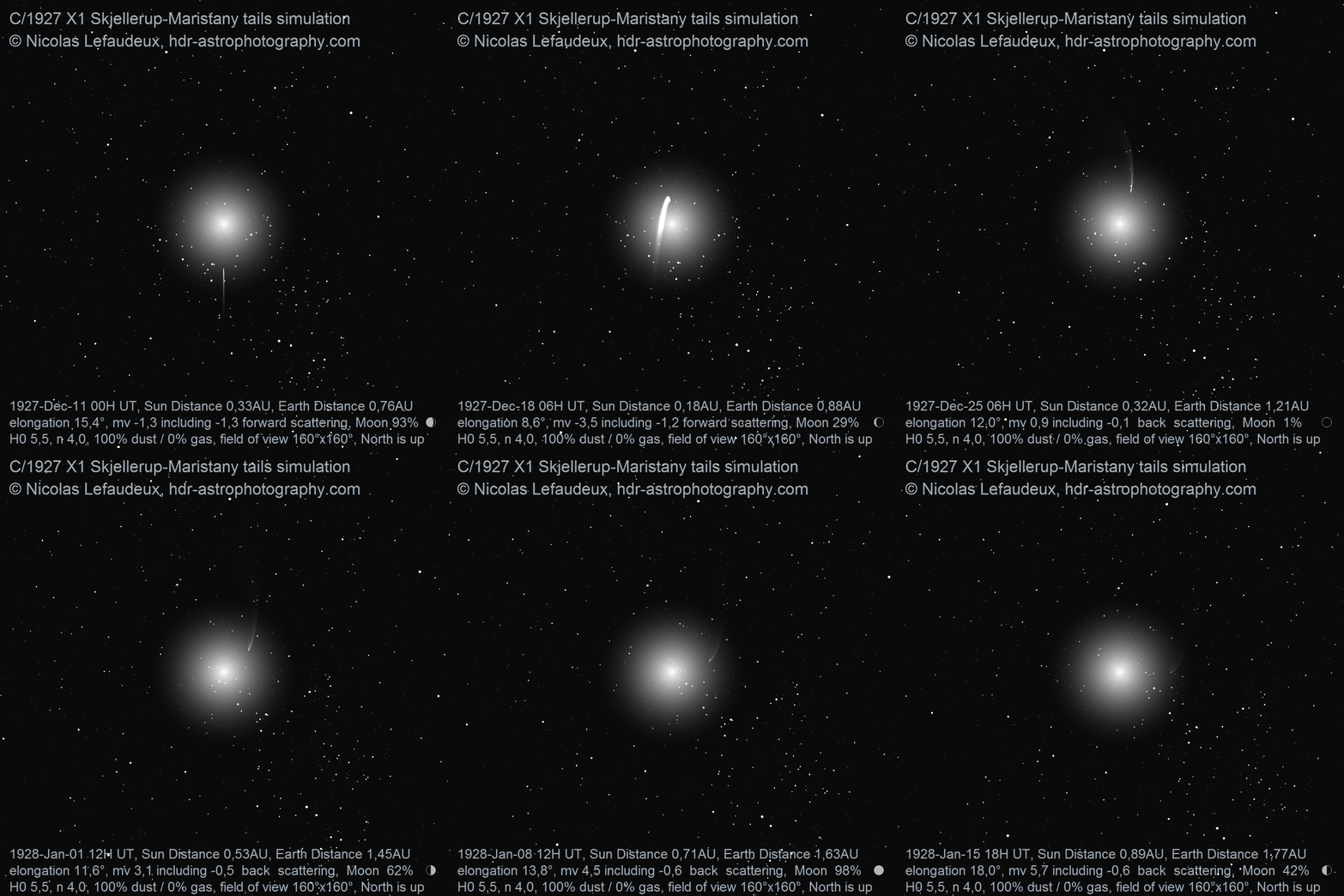
Comet Skjellerup-Maristany reached high brightness due to strong forward scattering enhancement in the period of December 14th to 16th 1927. Then its tail got visible as the comet head was still lost in the sun glare. The simulation renders well the ~40° degree long, low surface brightness tail sprouting up with comet head not visible, in the period of December 25th to January 2nd. After than the tail quickly lost brightness and disappeared.
- C/1917 F1 Mellish
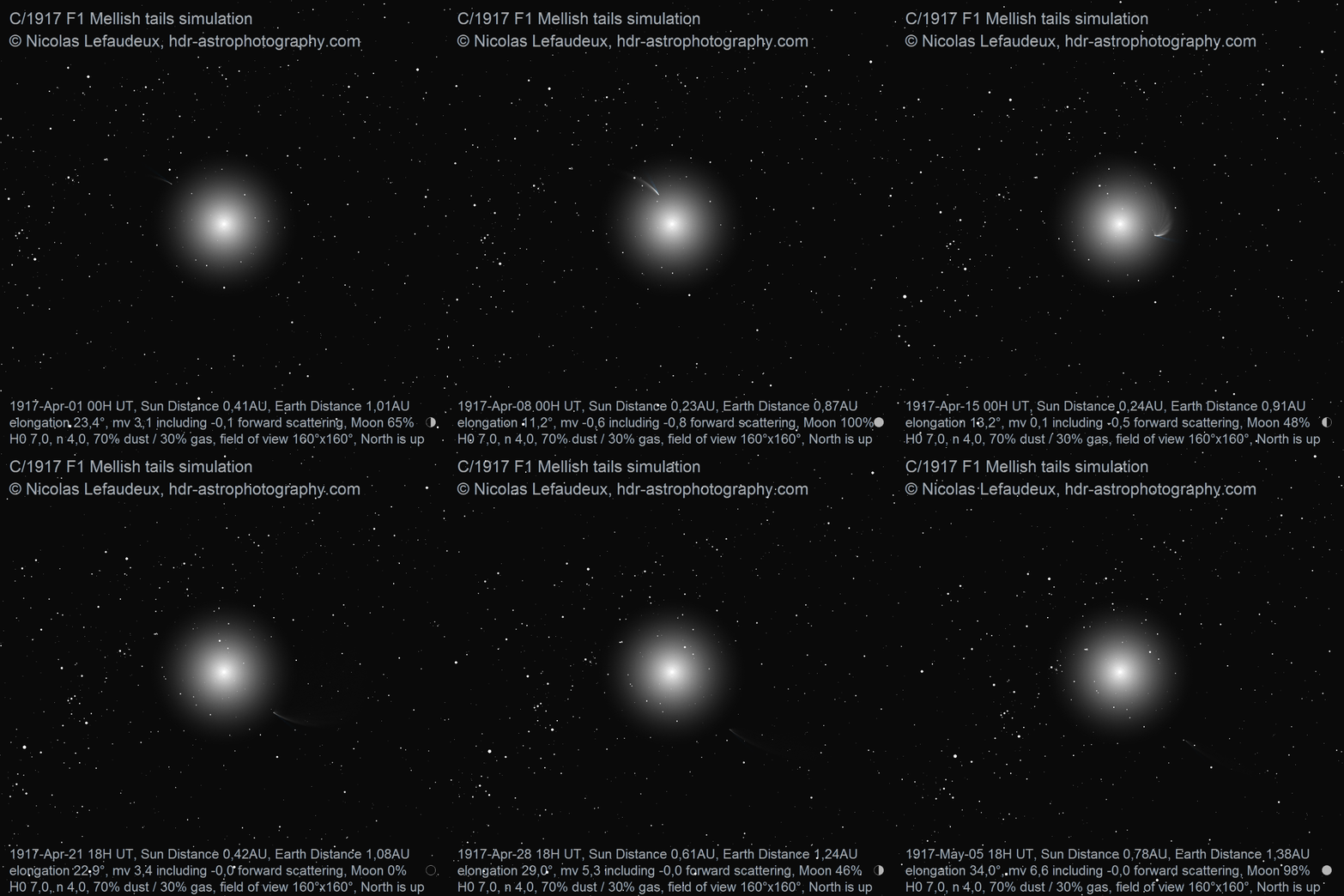
Comet Mellish is a little known comet that appeared during the first world war. There are little reports on it. The best report mentions a magnitude around 1 and 1.5 respectively on the 15th and 16th of April. This is what is used for the magnitude parameters. The usual slope parameter of 10 (n=4) gives a magnitude at perihelion around -2.5. with these values, the simulation renders a fine comet, probably better than NEOWISE. The simulations seem to give realistic tail compatible with what was reported, with a tail around 20° at best, with the first 10° quite well visible and the last 10° being low surface brightness. It is worth mentioning another report mentioning second hand information of the comet being brighter than Venus on a day that can be assumed to be April 14th. Such a ~-5 magnitude at this time would mean the comet would have been magnitude -7 at perihelion on April 11th, ie brighter than McNaught. With such values, the simulation gives a tail appearance notably greater than McNaught which is not compatible with what can be read on the first report. Thus it seems safe to assume that the second-hand “brighter than Venus” magnitude reported was probably overestimated.
- 1P Halley (1910)
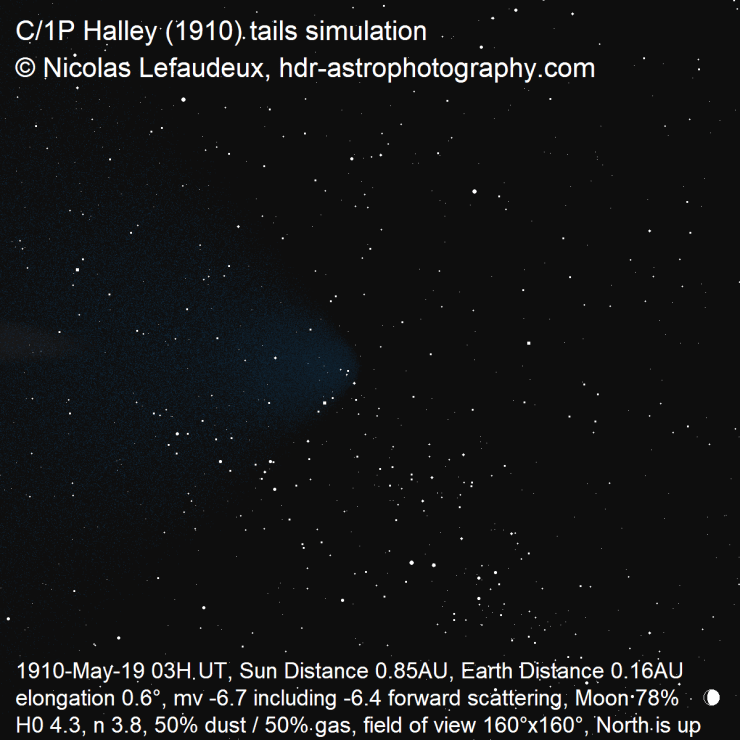
The passage of Halley comet of 1910 was one of the most spectacular of recent history. The simulation shows how the tail grew to extreme lengths (well above 100° length), as well as the time Earth went through the gas tail on May 19th, and how the dust tail must have appeared at the time of Earth close approach. Unfortunately, the moon spoiled the evening view for what would probably have been the best time of the display around May 20th.
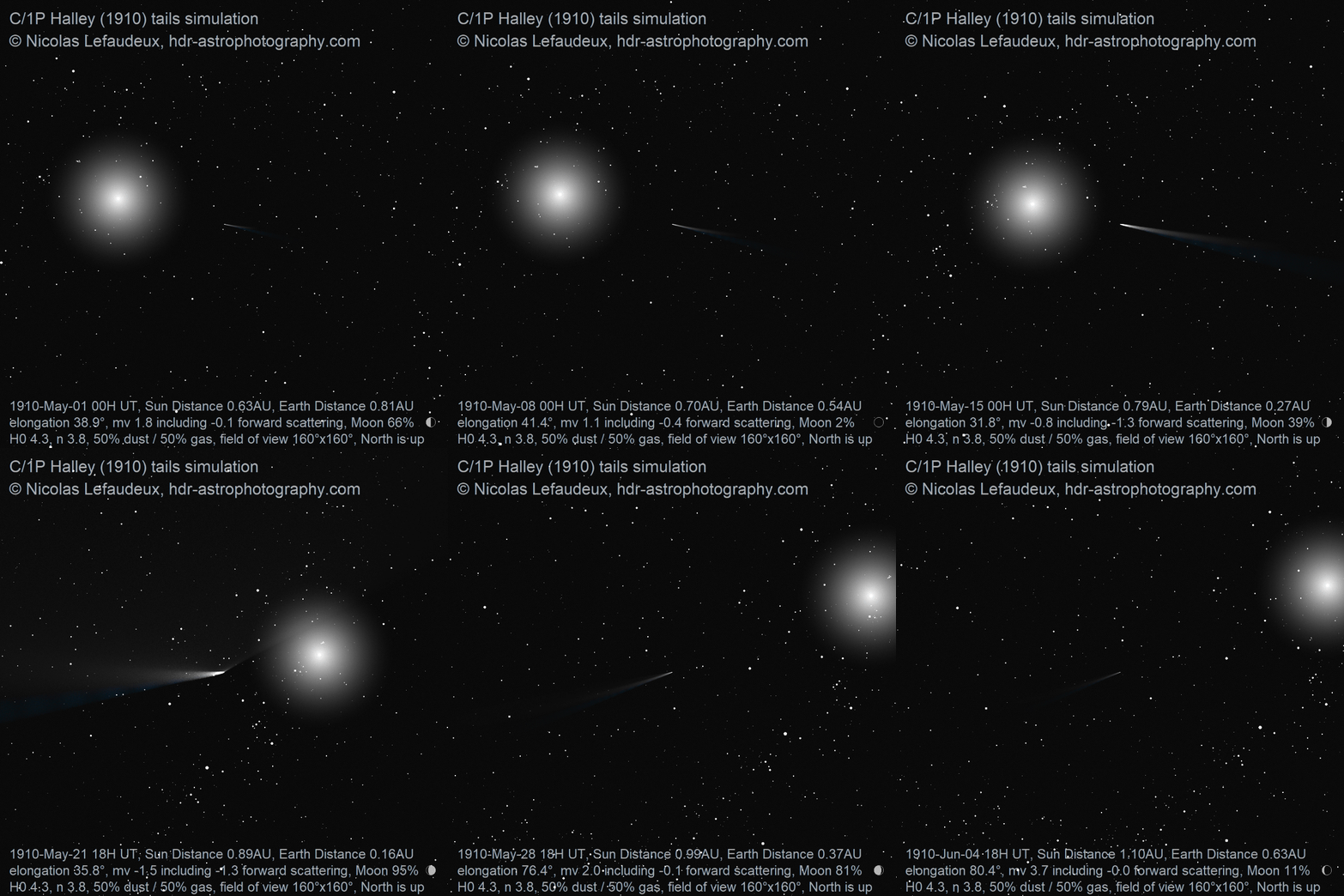
Simulation of Halley’s comet passage in 1910 as seen from Earth
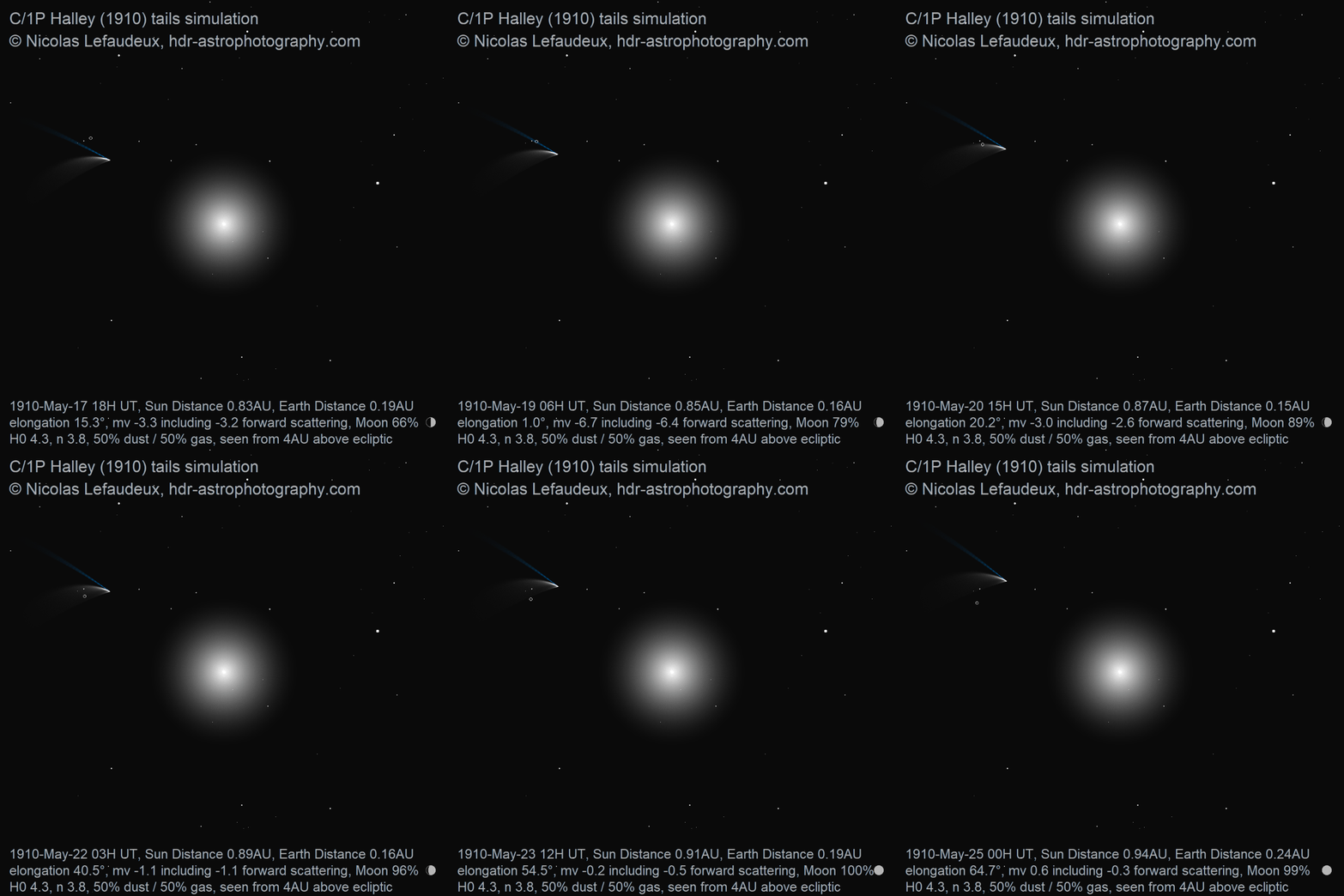
Simulation of Halley’s comet and Earth (white circle) as seen from above the solar system, showing how the Earth was located when it passed through the gas tail, and beneath the dust tail.
Among the many reports of observation, I found one report on the comet that is especially interesting to read while looking at the simulations. It is the report by Barnard who observed the comets on the day the Earth went through the gas tail, and the day before from the USA (Chicago). The drawings of Barnard on the 17th and 18th of May match very well the simulated appearance of the comet at those times. Also, Barnard reported auroral-like activity on the evening of 18th of May, for 6 hours between 19th 3h UTC and 9h UTC (not fully sure on how to translate the reported times to UTC). This observations seems noteworthy. Indeed, it appeared almost exactly at the time the Earth went through the gas tail. According to the simulations, the Earth crossed the gas tail between 4h and 11h UTC, so this is a close match. Furthermore, the level of activity of the sun was very low in mid-1910. Thus, it seems very possible that these auroral could have been the structures of the gas tail of the comet. Or could it have been auroras induced by the gas ions of Halley comet tail instead regular aurora induced by the solar wind ? That could seem far fetched but as the plasma tail is made of moving charged particles, they should be affected by the Earth magnetic field and possibly could have triggered “comet-auroras” ? Obviously, it is now impossible to be sure, but the probability of it being regular auroras happening exactly at the time Earth was in the gas tail of the comet, at a period of low solar activity seems to be no more than a few percents, thus those were probably anyhow related to the gas tail of Halley’s comet.
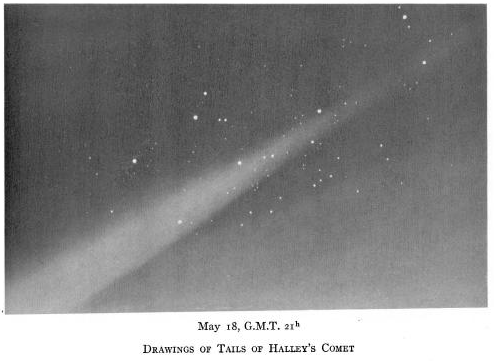

Two days later, Barnard mentions the observation of what he interpreted as a strip of haze going from theta Aquila to alpha Pegasi. Yet, as he mentions, other people reported similar observation from South Africa and Cordoba. Indeed, it seems that this was actually the gigantic anti-tail of Halley’s comet that is apparent in the simulations! The location reported matches the position of the heaviest dust particles. This would make it probably the longuest and greatest anti-tail of any historical comet, visible on the opposite side of the sun for more than 100° from the comet head!
Another interesting report from Maxwell Hall in Jamaica contains similar observations of some light in this area, visible on the next days from Jamaica. The drawing of the report corresponds to May 20th 9h UTC. The stripe of light drawn corresponds to the location of the anti-tail of Halley’s comet.


Hall reports observation of very faint light on the two following nights, and again the location he reports is a close match between the anti-tail rendered in the simulations (see the stretched images below).
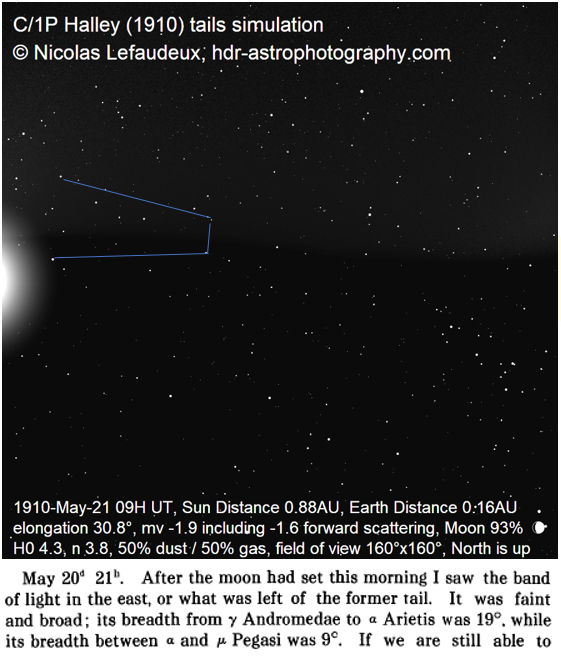
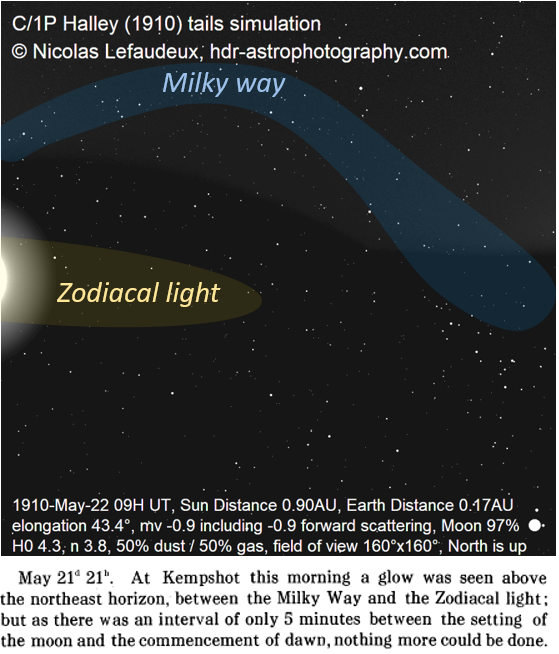
A last interesting aspect of the report by Hall, is that it highlights the strong effect of the moon interference. Without moon interference, he could detect visually the low brightness anti-tail in the morning, whereas in the evening with moon interference, he could only see the very brightest part of the comet head with triangular shape. Would the moon not have interfered, it is probable that the comet tail would have appeared as an enormous diffuse glow covering a large area of the evening sky.
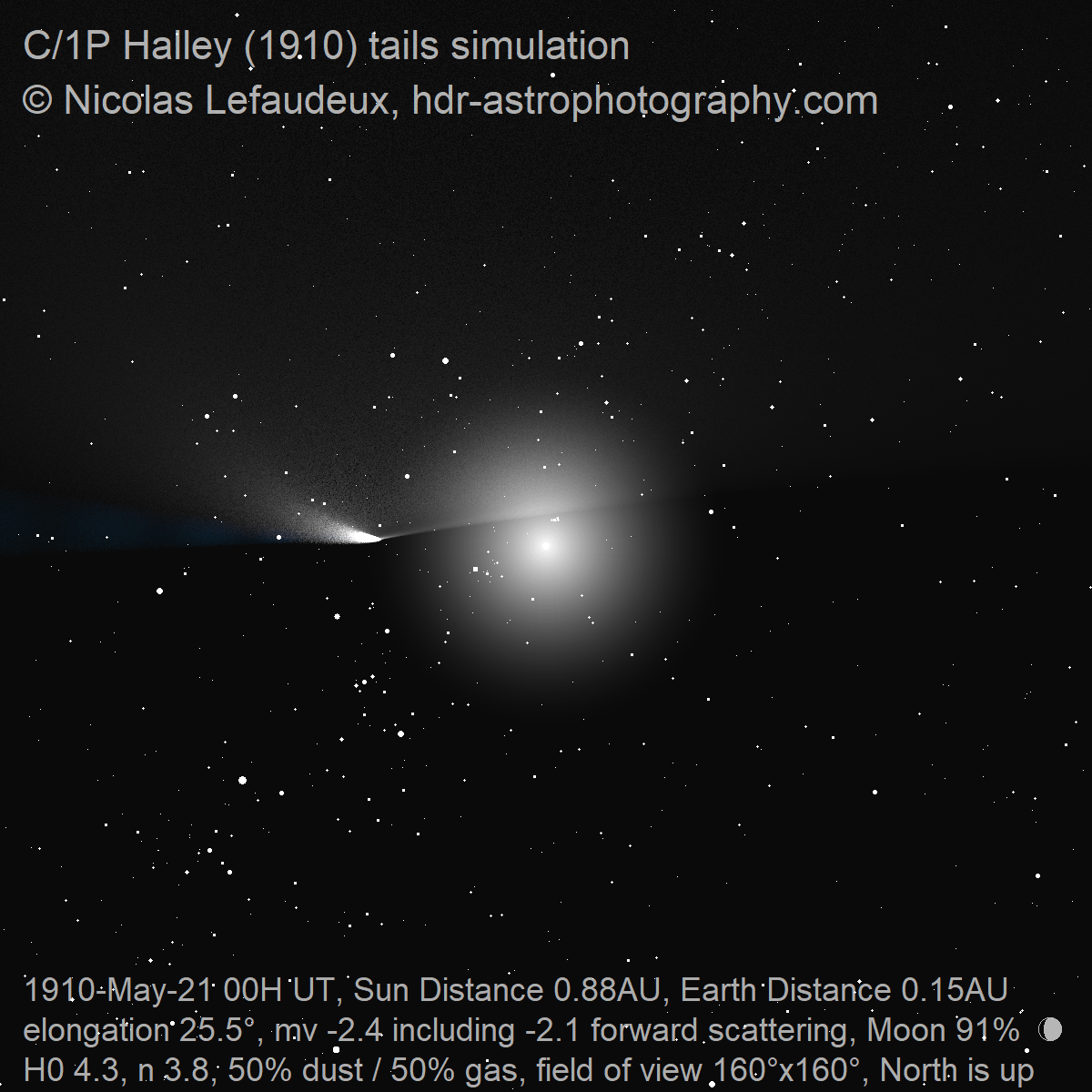
Some authors have suggested that the tail could have made a full 360°. According to the simulations, it seems that it could have indeed be the case at two distinct time. The first time was during a 12 hours centered on May 20th 0H UTC, when the comet had just passed the sun. At that time, the Earth was located in between the gas tail and the dust tail. The gas tail was in the evening sky and probably reached Scorpio, while the dust tail was in the mornign sky must have reached Aquila, making the combination of both around 310° length (so not quite a full ring, but close). The second time was for between May 20th 18UTC and May 21st 18UTC when the Earth was located just beneath the dust tail, that would have shown up “all over” the northern hemisphere sky. it would then not have look like an usual tail, but more a “hemispheric display”. However, in both case, the moon would have interfered with the evening part of the tail, and it seems unlikely that it would have been possible to see this very unusual appearance.
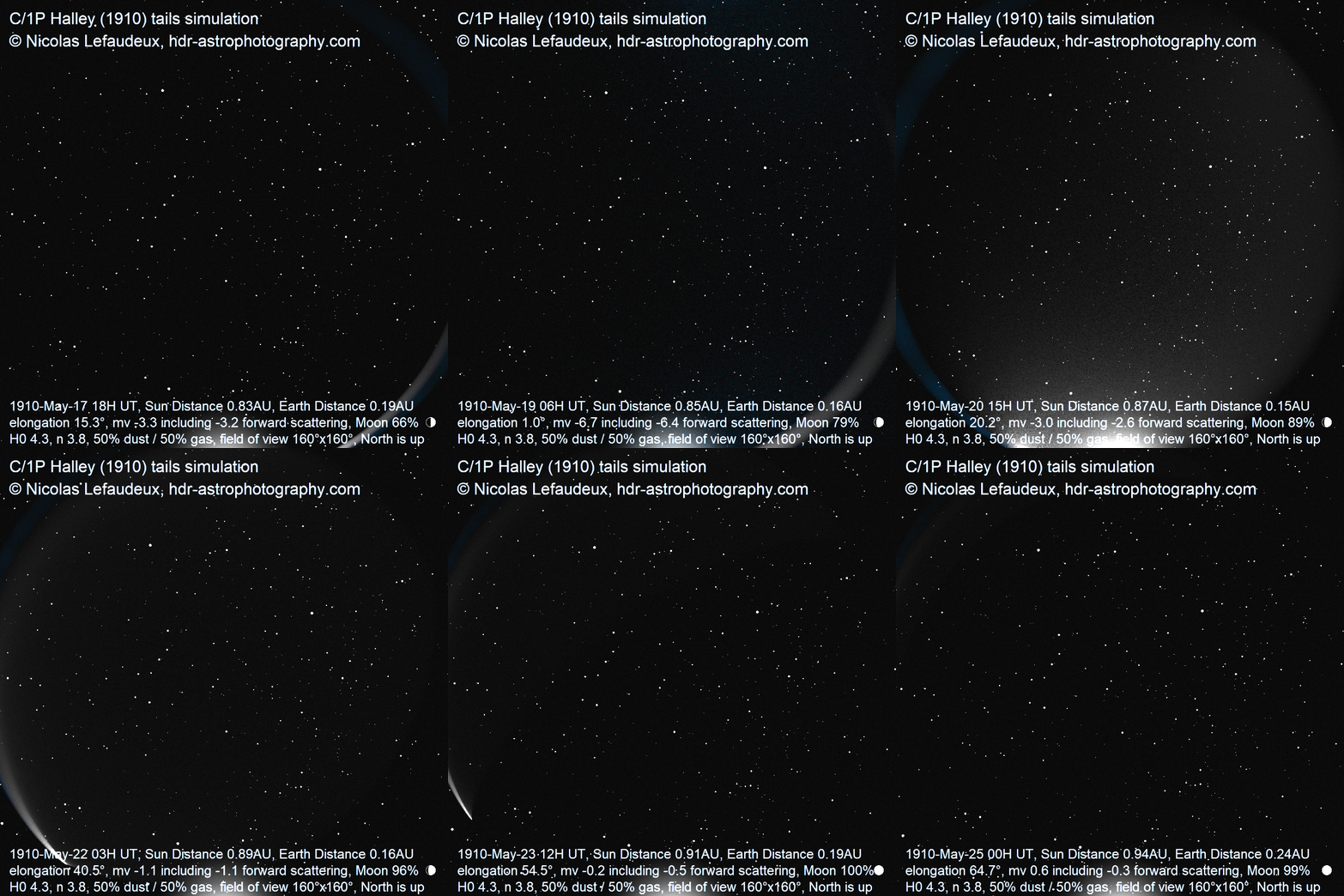
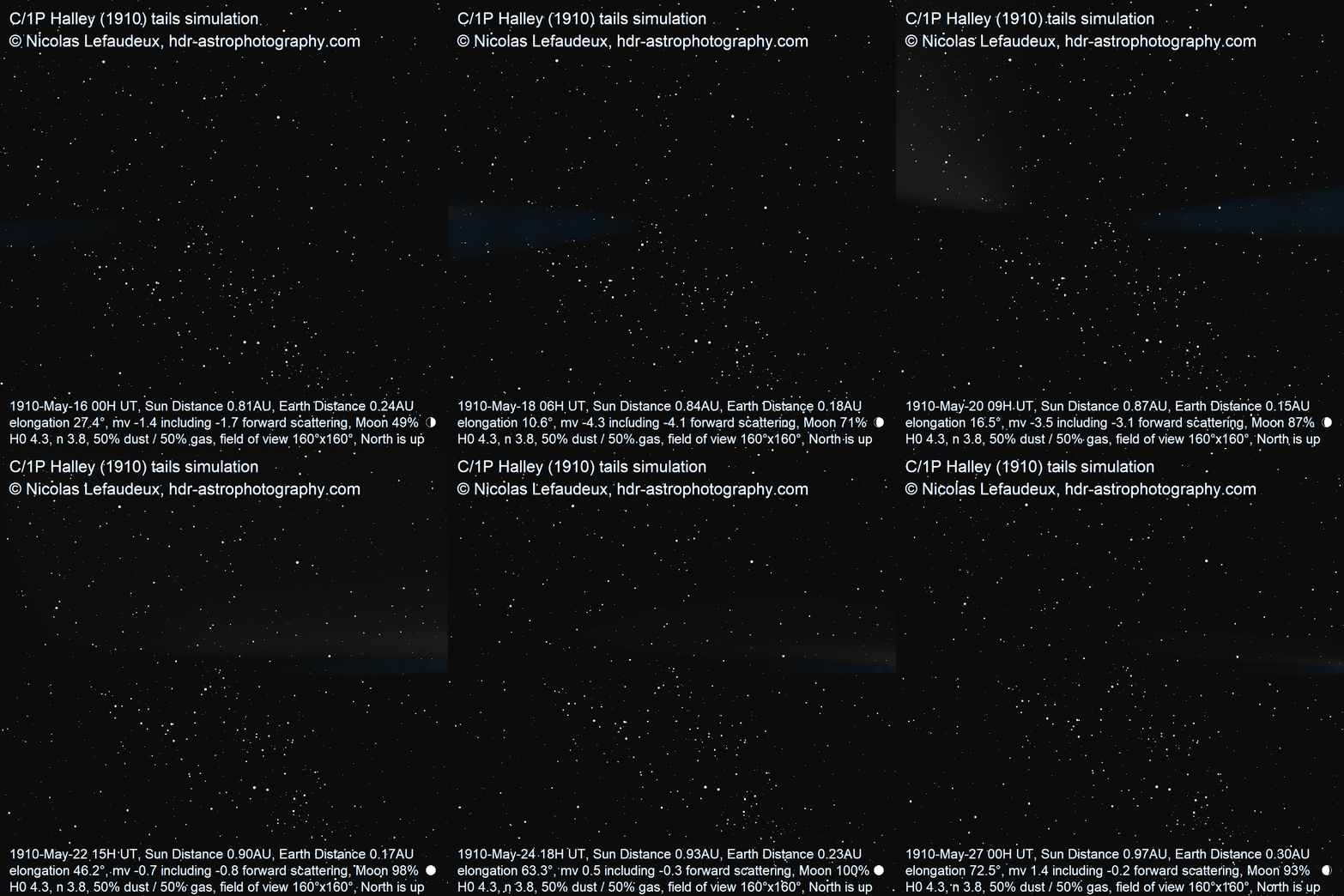
Animations of the tails of Halley’s comet with stretched intensity: on the left, centered on the northern sky zenith. on the right, centered on the antisolar direction
A last report worth mentionning is the book “The Greatest Comets in History” by David Seargent, who mentions a ship passenger in the Mediterranean noticing a Gegenshein like glow on May 19th opposite of the comets. The probable time of observation was when the moon was set, so around 3h UTC on May 19th. According to the simulation, it could then have probably been the gas tail, just before Earth entered it, and not the dust tail as suggested in the book.
- C/1910 A1 Great 1910 Comet
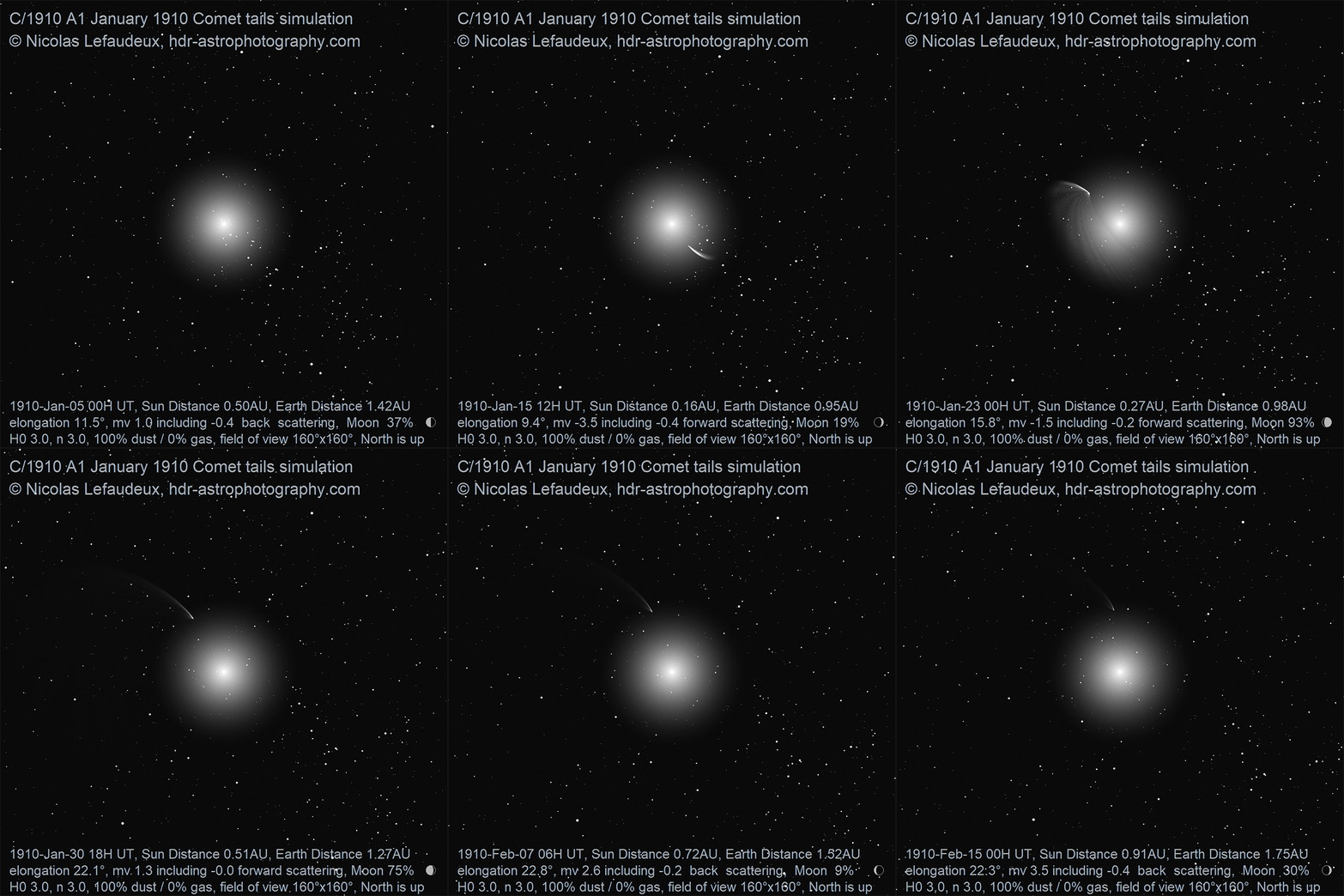
Comet C/1910 A1 was a great comet that was visible in the beginning of the year 1910. It was observed as a bright object in daylight, at less than 3° elongation (about half the distance from the sun of McNaught). The simulation show that the comet developing a wide, curved and strongly striated dust tail for a few days between January 23rd and 25th. Unfortunately at that time, the moon was full and interfering with the view and only the brighter initial 10° to 20° of the tail were reported. Starting from January 27th, it was possible for the first time to observe the comet without moon interference. At that time, the wide curved tail had already mostly vanishes, and only the brighter part of the tail remained. Tail lengths reported then were from 30° to 50°, consistent with the simulations. On the first days without moon interference, various reports indicated that the tail was then merging in an extended glow, or mist. According to the simulation, this glow was probably the remains of the wide, curved, dust tail that would have been visible a few days earlier if the moon had not interfered.
 HDR astrophotography by Nicolas Lefaudeux
